
Marsh Mallow
Althaea officinalis | Leamhach
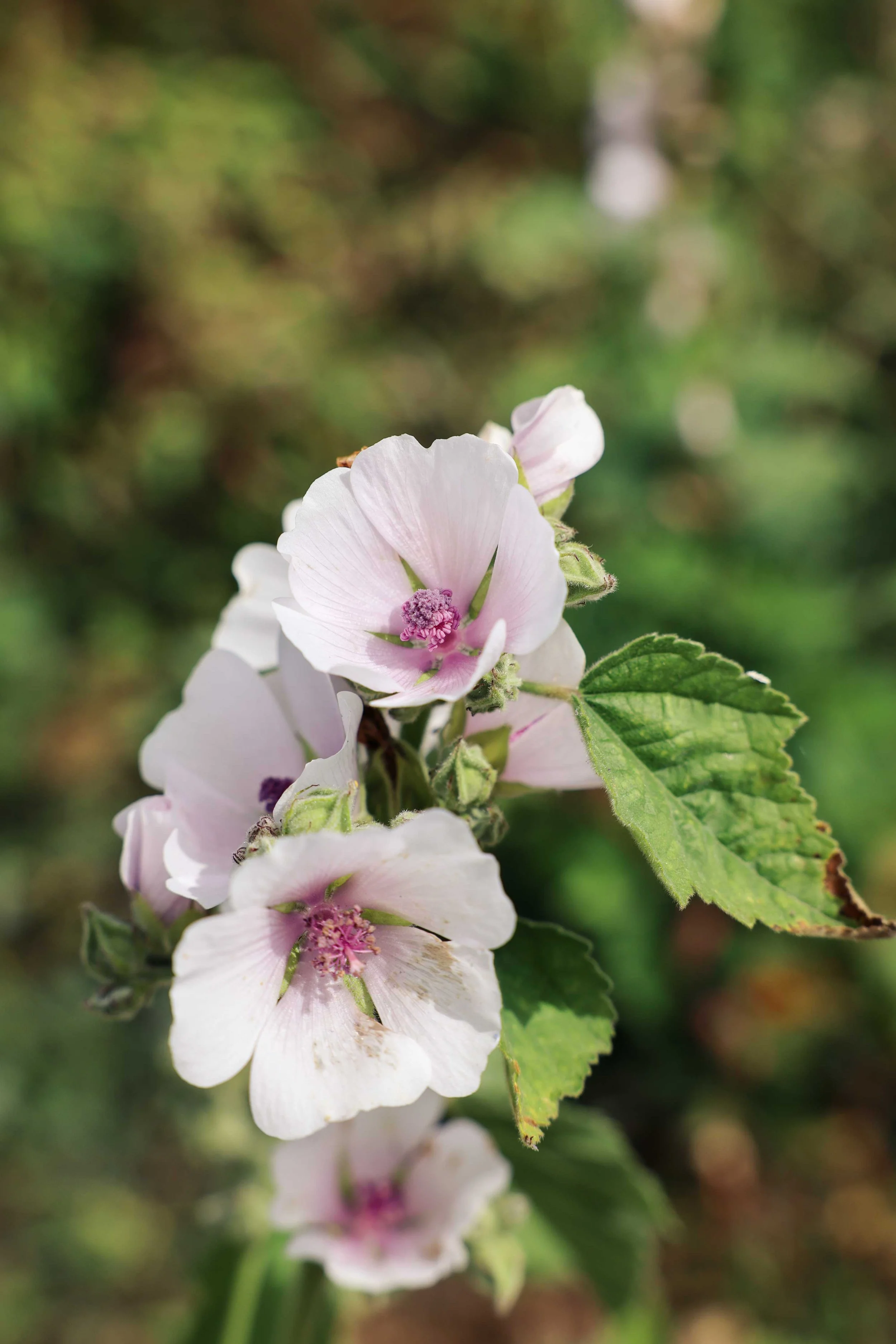
Mallow is a well-loved flower of the Irish countryside, easily recognised by its mauve flowers. Marsh mallow is a member of the same family but, as its name suggests, it prefers a wetter soil type. Marsh mallow has a lighter, pale pink flower that almost has a bluish hue and usually flowers in groups of three. Although they are very closely related and were interchangeable in Irish herbal medicine and folklore, they are actually different species of the same family.
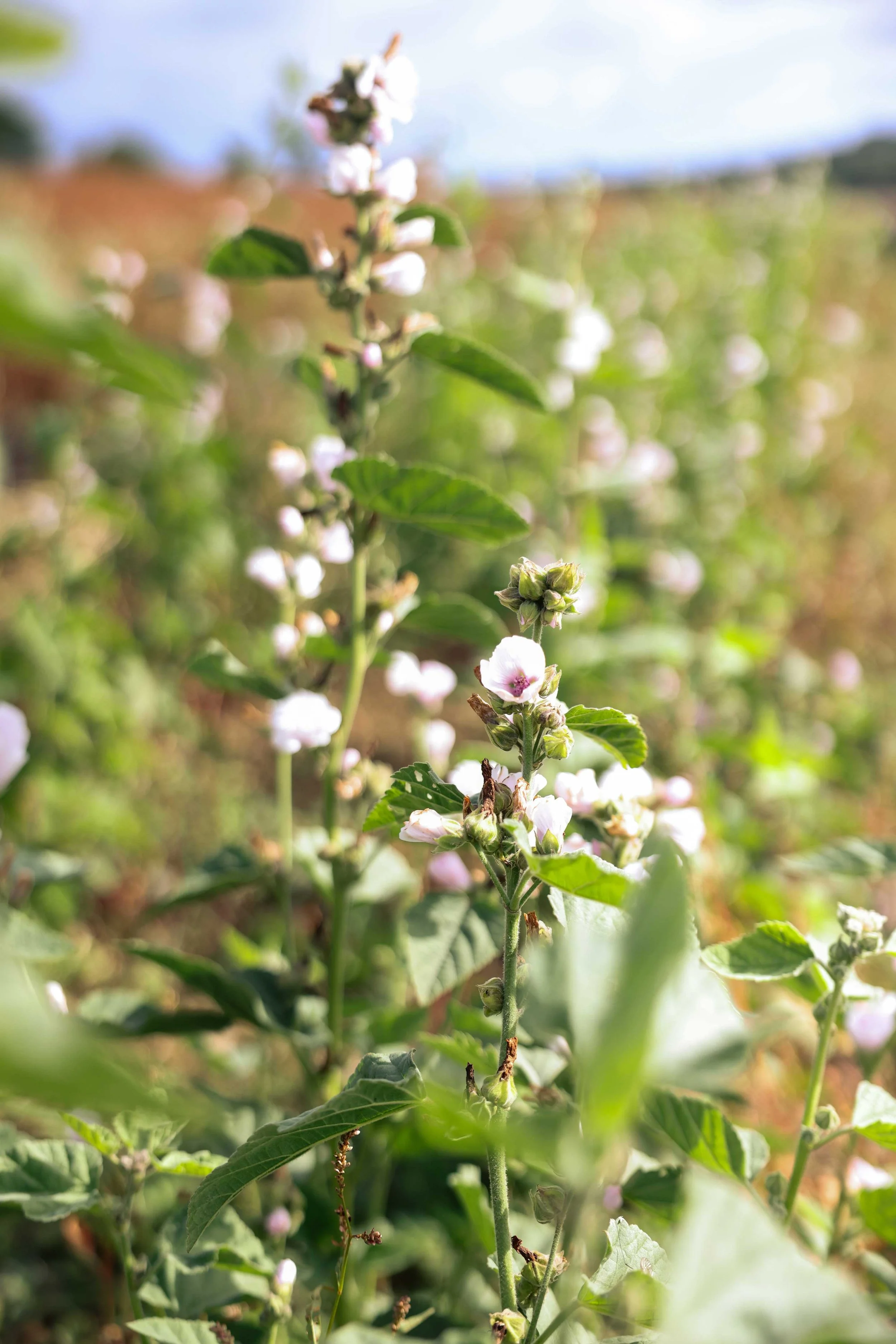
Mallow is a ground-hugging, creeping herb whereas marsh mallow grows tall, up to 1.5m. It was one of the seven magical and protective herbs in Irish folklore. It was believed that the plant could not be harmed by natural or unnatural forces. To be fully effective, the marsh mallow had to be harvested at noon on a bright day, near the full moon. People would use the plant as charm to ward off fairy magic.
The Dublin suburb of Lucan (Leamhcán in Irish) literally translates to ‘place of the marsh mallow’. Folk history tells that the area was named for dense, wild patches of the marsh mallow plant that grew along the banks of the River Liffey.
Planting / Foraging
Most commonly found around coastal areas or damp marshy ground, marsh mallow is reasonably common in the right environment but also quite easy to grow at home. We have planted a couple of hundred plants on the farm and they are thriving.
The root cannot be harvested until the second year of growth and only after the plant has died back and gone into dormancy.
Uses
In modern herbal medicine, it is the root of the marsh mallow which is predominantly used and it is a demulcent or emollient mucilaginous herb. Marsh mallow root is known for soothing irritated tissues and also sore throats. It supports digestion and is used for heartburn, acid reflux and diarrhoea.
Mallows also have a long history of being used as food. The common mallow is entirely edible and there is evidence that the Romans considered a dish made from marsh mallow to be a delicacy.
In the past, marsh mallow was used to make the base of the sweets that still bear its name. The thick, starchy, mucilaginous roots were gathered and boiled and whipped with sugar. There is written evidence of the ancient Egyptians using the root in this way, although they blended the boiled root paste with honey. They used it to soothe sore throats, coughs and hoarseness, and to heal wounds. The modern sweet is simply made of sugar, starch and gelatine and does not contain any mallow.