
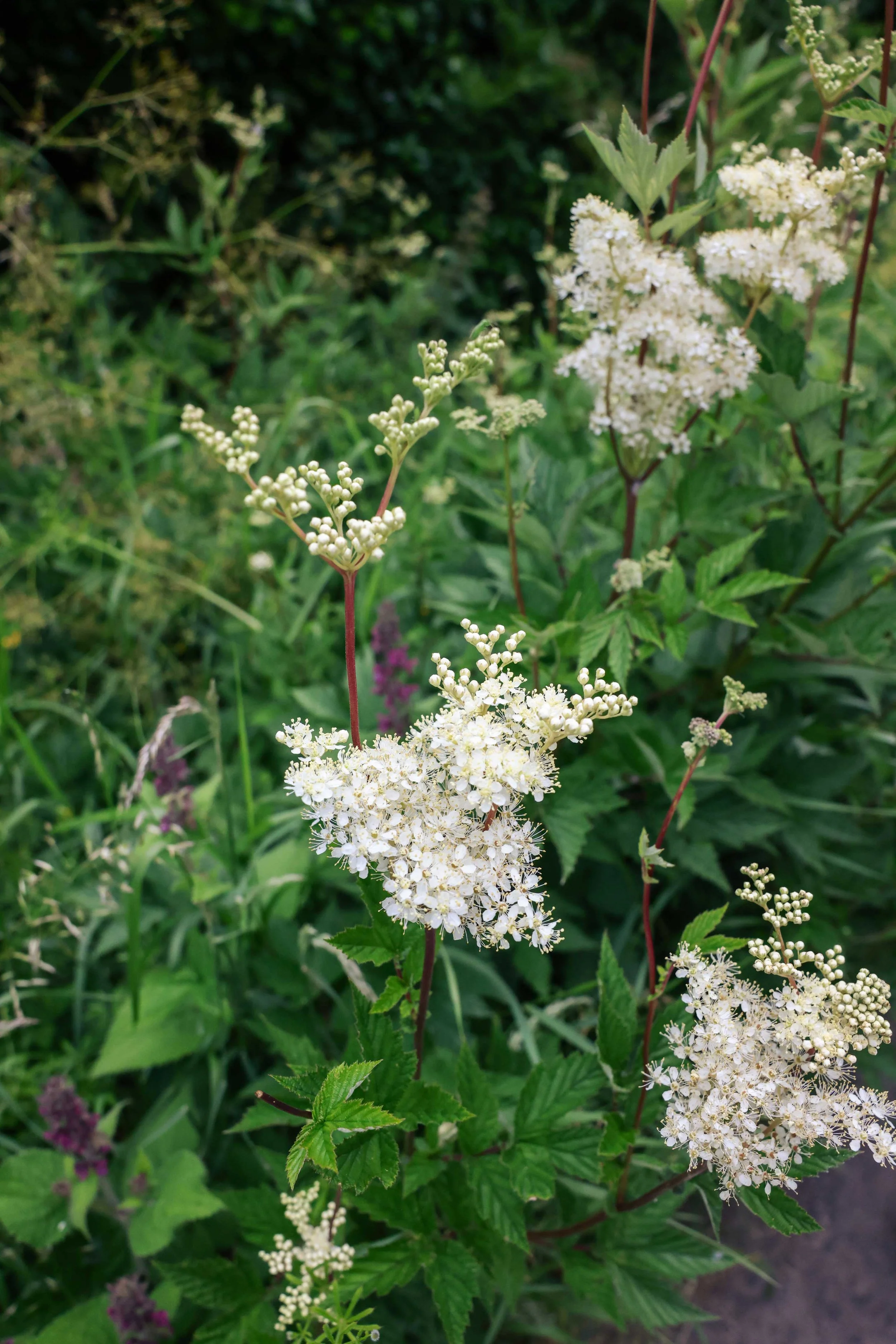
Meadowsweet
Filipendula ulmaria | Airgead luachra
The name meadowsweet actually has nothing to do with meadows. It comes from ‘mead sweet’, when this sweet, delicate herb was used to flavour mead in medieval England. It has an airy, slightly nuttier flavour than elderflower, and the fact we still drink elderflower cordial while meadowsweet is not as widely used is just one of those casualties of time.
Traditionally, it was also used as a floor covering in medieval times. It was scattered on floors along with rushes, used for its fragrance, which was renewed and re-released with passing foot traffic. We have a compost toilet on the farm and we have been using meadowsweet on the floor and it really does work as an air freshener.
A peculiarity of meadowsweet is that the flower has a completely different smell to the leaves. The flowers have a strong, sweet smell and the leaves have a heavy almond fragrance.
Meadowsweet was the basis for the development and first version of aspirin. The salicylic acid found in meadowsweet is a painkiller and once chemists learned to extract this chemical, they used it to develop aspirin. The name aspirin comes from ‘A’ for acetyl and ‘sprin’ for spirea, the original botanical name for meadowsweet. So, even though at a later stage in aspirin’s development willow bark was discovered to be a better source of salicylates for mass drug production and most people now associate willow with aspirin, it was actually meadowsweet that was used originally.
Planting / Foraging
I have always found meadowsweet tricky to germinate, but it is abundant in hedgerows and grasslands, so is very easy to forage.
It is a flower of damp soils and grasslands. In Ireland, during the months of May to September, early to late summer, it is profuse. Its favourite spots are damp shade in the hedgerows, where it complements its close neighbour, cow parsley. They are both members of the umbel family, a plant genus name I always loved as it is so easy to remember. Think umbrella. For those interested in learning more about detailed plant identification, a great book I would recommend is Botany in a Day (2013) by Thomas J. Elpel.
Uses
The flowers can be added to stewed fruit and jams, or even fruit salads, giving them a subtle almond flavour. It also makes a great cordial; full of all the goodness of the plant. As it flowers after the elder, it is a great summer delight.
For the herbalist’s apothecary, because of the high levels of salicylate, meadowsweet can help relieve headaches, muscle pain and joint inflammation, making it an excellent natural remedy for arthritis and rheumatism.
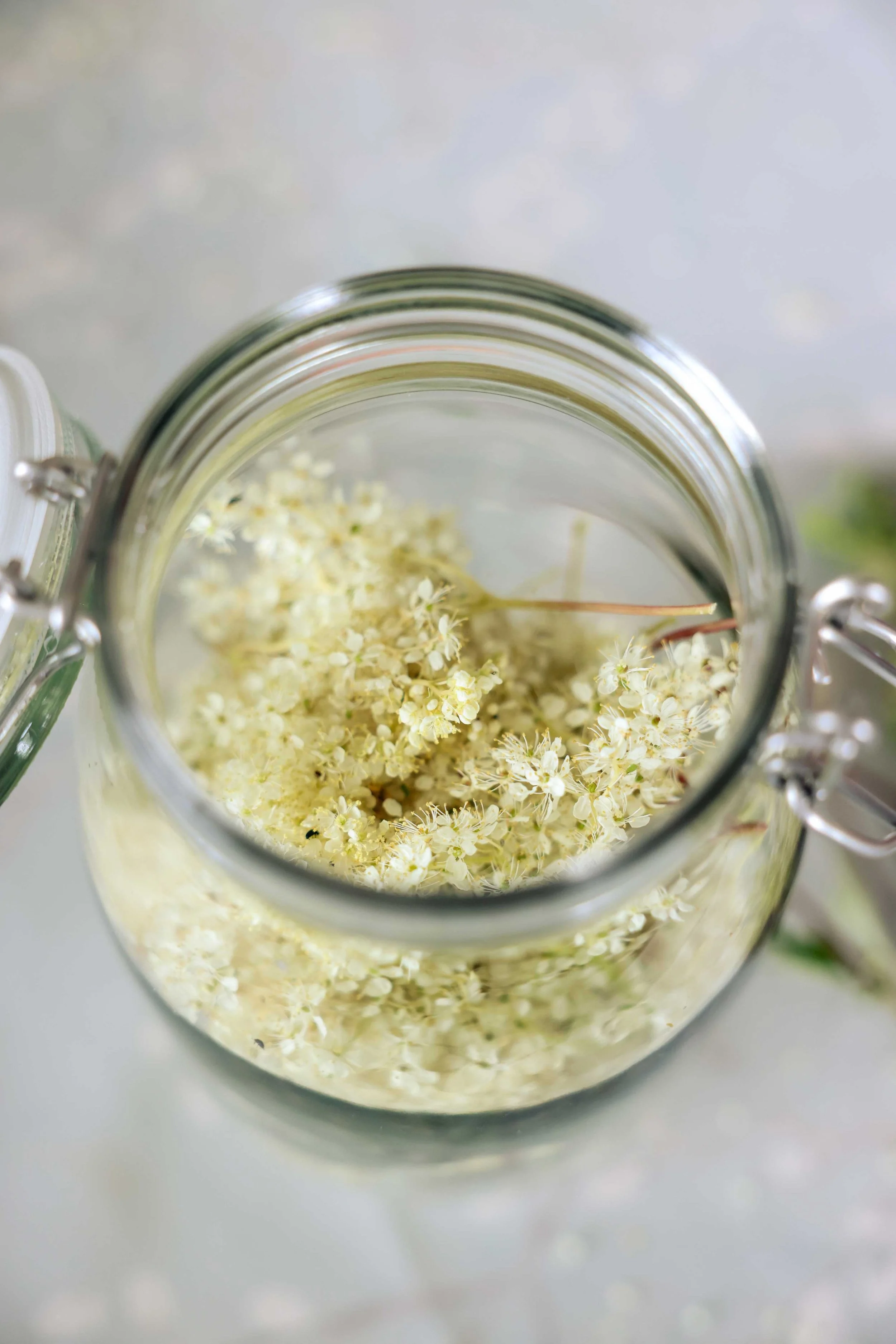
It can be used as a tea, using dried meadowsweet flowers and leaves, and is well known for relieving digestive issues, fever and headache.
As a tincture, it can be taken for pain relief and inflammation support. As a poultice, using fresh or dried meadowsweet, it can be applied to wounds or sore joints for its anti-inflammatory effects.