
Elder
Sambucus nigra | Trom
In Ireland, along with the hawthorn and rowan tree, elder is one of the trees people are most superstitious about. It was often used as protection from the fairy folk. In some parts of Ireland, elder trees were considered a plant of protection; in other parts, people believed they were the gateway to the otherworld. It was often planted at the back door to keep evil influences at bay, with the rowan tree at the front.
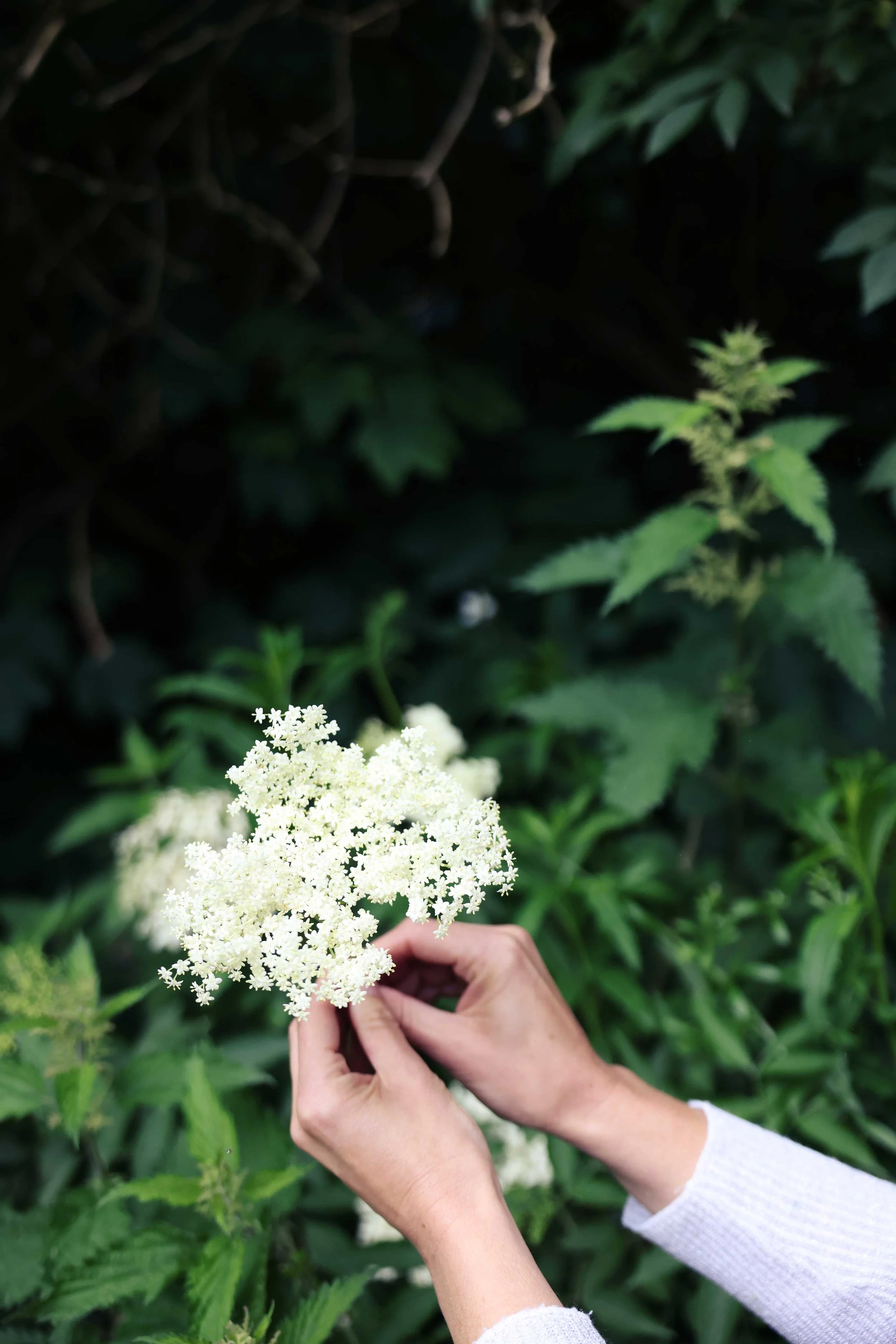
Elderflower cordial is the taste of summer; it’s right up there with strawberries and cream. Delicate, ethereal, floaty and sweet, it is like summertime in a bottle. It has a slightly heady, narcotic aroma when in bloom.
Elder is reputed to keep flies away and so was planted around dairies in an attempt to keep the milk as clean as possible and to help stop it from turning.
Planting / Foraging
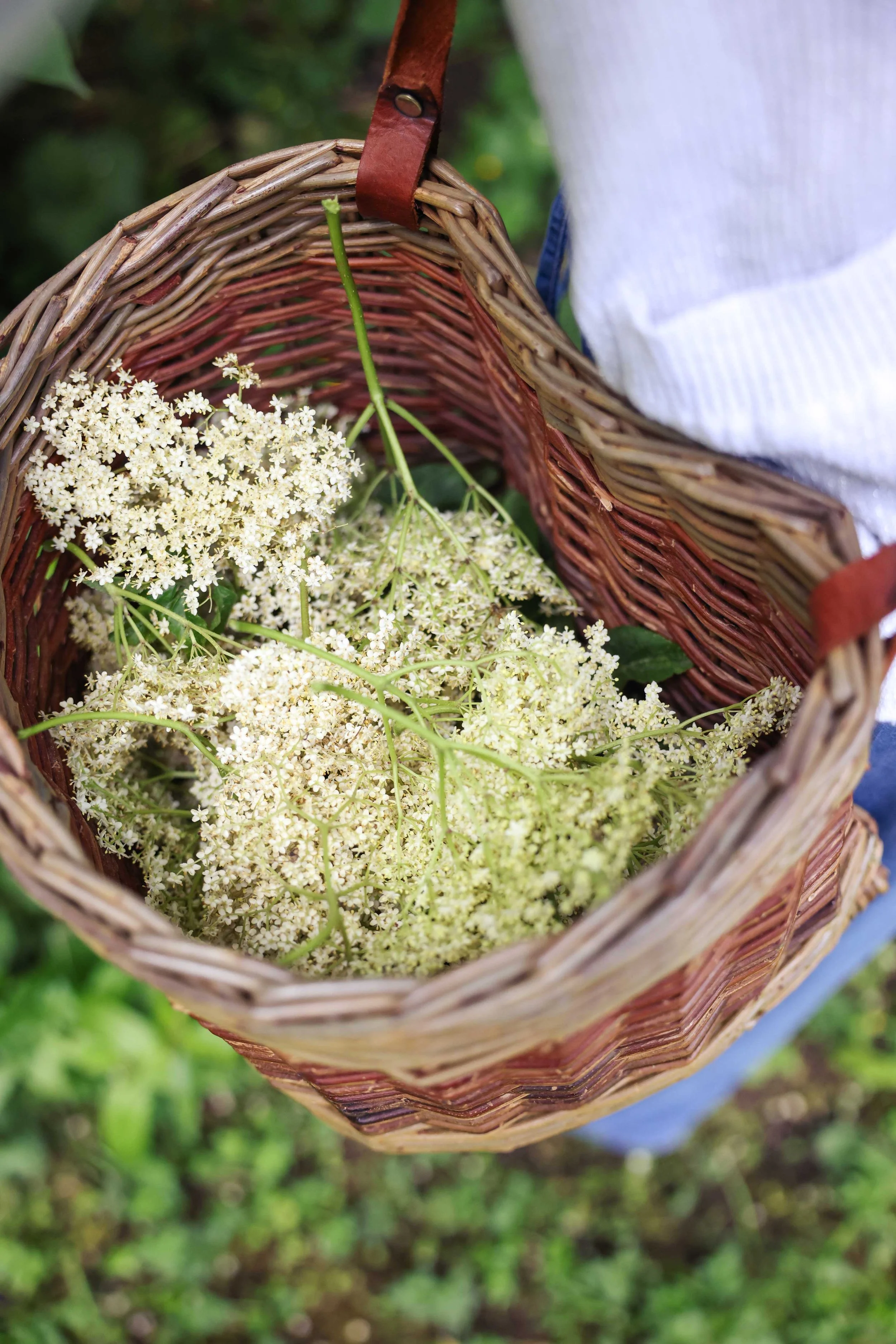
Elder is abundant in Ireland, and because it takes a while to grow to fruiting stage, it doesn’t really make sense to try to grow it for cultivation. It is a tree that gives throughout the year – the elderflower makes the best cordial, then the elderberries are a magnificent source of vitamin C and make a terrific syrup. It can be used to make great and flavoursome vinegars, oxymels and tinctures as well. So it is a giving tree from late May, when the flowers first come into bloom, right up until Samhain, when the birds have cleared off most of the berries.
Uses
Elderflower tea (dried elderflowers) is a very good first treatment for the onset of flu, often combined with mint and yarrow. The tea is also good for catarrhal inflammation of the upper respiratory tract. The leaves can be used topically (rubbed onto the skin or placed on the skin and wrapped with a bandage) for bruises, sprains and wounds.