
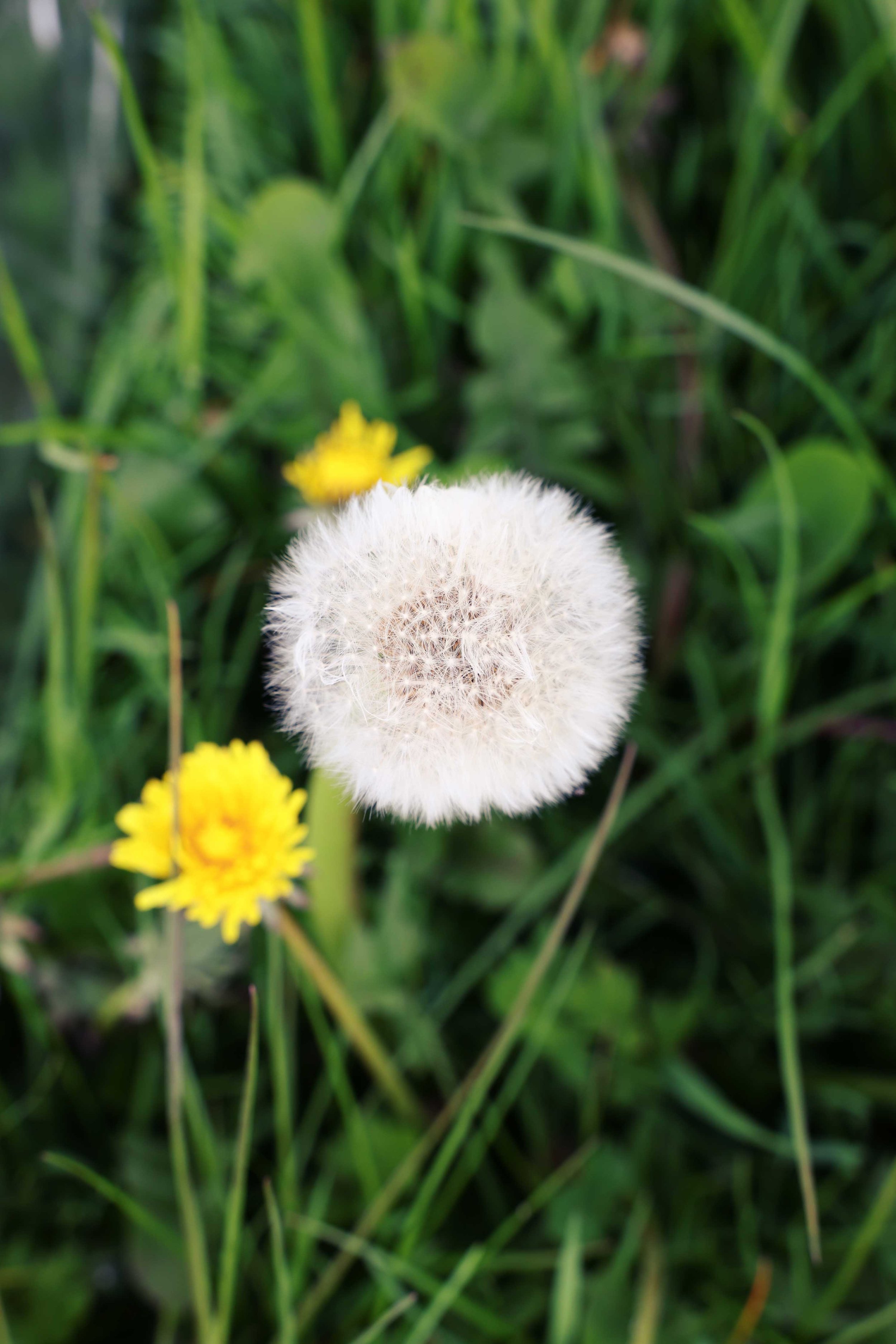
Dandelion
Taraxacum officinale | Caisearbhán
Dandelion is one of the first wildflowers of the year to come into bloom, sometimes as early as February. The name dandelion comes from the French dent de lion, which means ‘lion’s tooth’. It is thought that the name came about because of the serrated edge of the leaves.
Dandelion is right up there with elder and nettles as the wild plant drawn on most widely and heavily for folk medicine. Its energetics are bitter, sweet and cooling.
Planting / Foraging
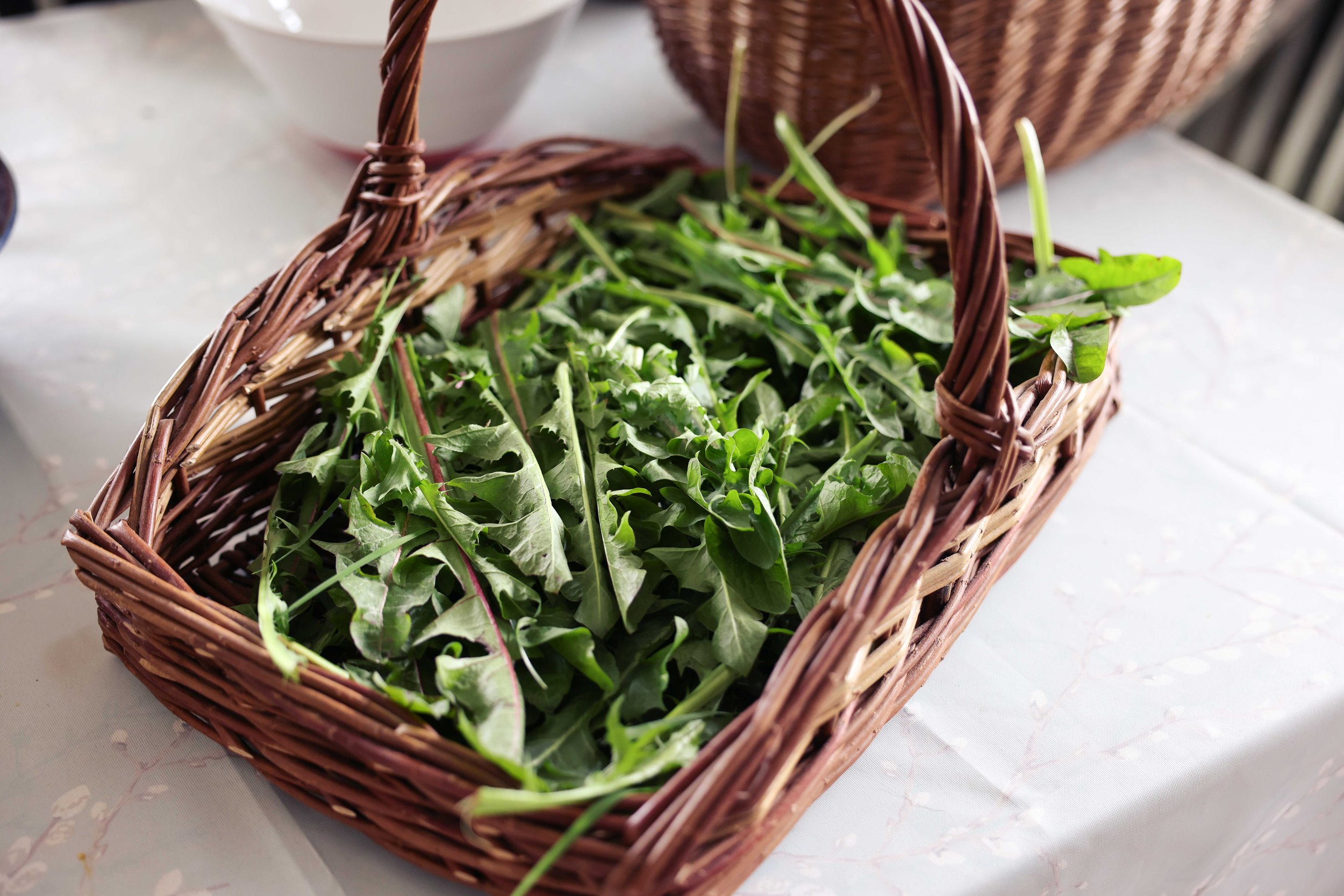
Dandelions can be foraged but, depending on the area, the leaves can be quite small, so foraging may involve a lot of bending over and picking leaves. It is also very easy to grow them from seed. You can collect a load of seeds from the fuzzy seed heads when they are in bloom, obviously before the wind carries them away on their journey. Then all you do is rub the globe-like seed heads between your hands, over a bowl. The seeds will break loose and fall into the bowl. You can then plant the seeds in pots or directly in soil in the ground. They have fantastic germination rates and the plants, if planted in a prepared bed, can be quite vigorous.
Uses
Dandelion rivals dock leaves to the extent that it is known all over Europe for one main purpose: as a diuretic. This means it promotes an increased production of urine. Many common folk-names for the plant are variations of ‘piss the bed’ or ‘wet the bed’.
It’s really useful (the leaves for the kidneys and the root for the liver and gall bladder) for getting rid of toxins from the body by supporting the actions of the liver, bowel and kidneys. And, interestingly, it is recommended for the treatment of infected root canals! Both dandelion leaf and dandelion root have been proven to have microbial properties and are irrigant solutions that can aid disinfection of the root canal system. Just put a few drops of tincture on the infected area for two weeks. This is another example of the doctrine of the signatures theory, ‘like helps like’, because the leaves’ jagged tooth-like edge resembles a tooth.
The various parts of the plant have different medicinal benefits, so it is a bit of a treasure chest all on its own. It is associated with many different ‘cures’ around the country, including references to dandelion being used for ailments such as cuts, sprains and swellings, and even diabetes. One of the best-known cures from dandelion was for a stye in the eye, cured by rubbing the milky sap of the stem on the affected area.
In ancient Ireland, a cure called ‘Dian Cécht’s porridge’ was prescribed for fourteen different disorders of the stomach, as well as for colds, sore throats and worms. It was a brew made from a mixture of dandelions, hazel buds, chickweed, wood sorrel and oatmeal.
The young leaves of the dandelion can be eaten in a salad and the roots are used to make a coffee-like drink.