
Comfrey
Symphytum officinale | Lus na gcnámh mbriste
Traditionally used externally for swellings, bumps, bruises, sprains and most wound care, its name in Irish is lus na gcnámh mbriste, which translates as ‘plant for broken bones’.
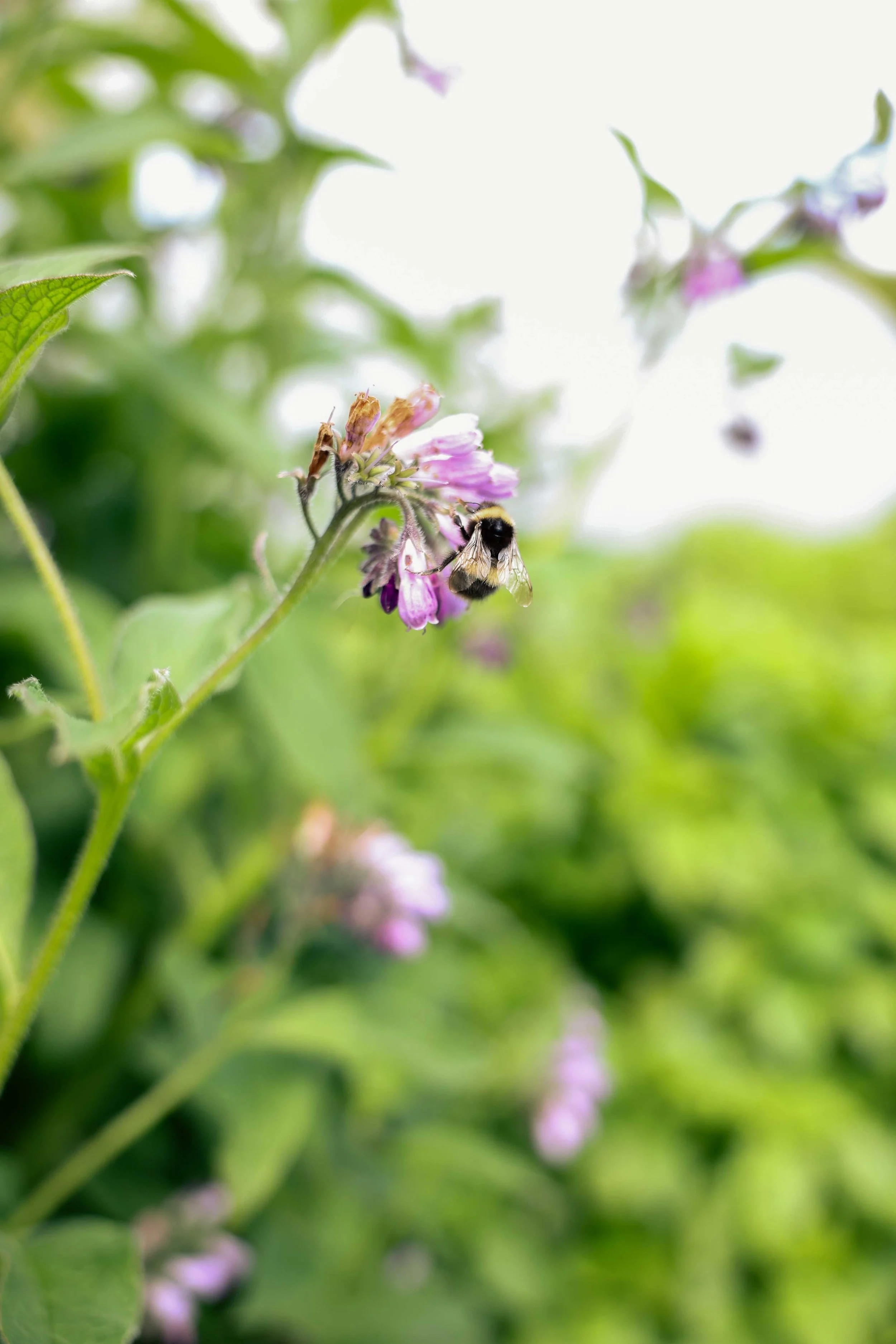
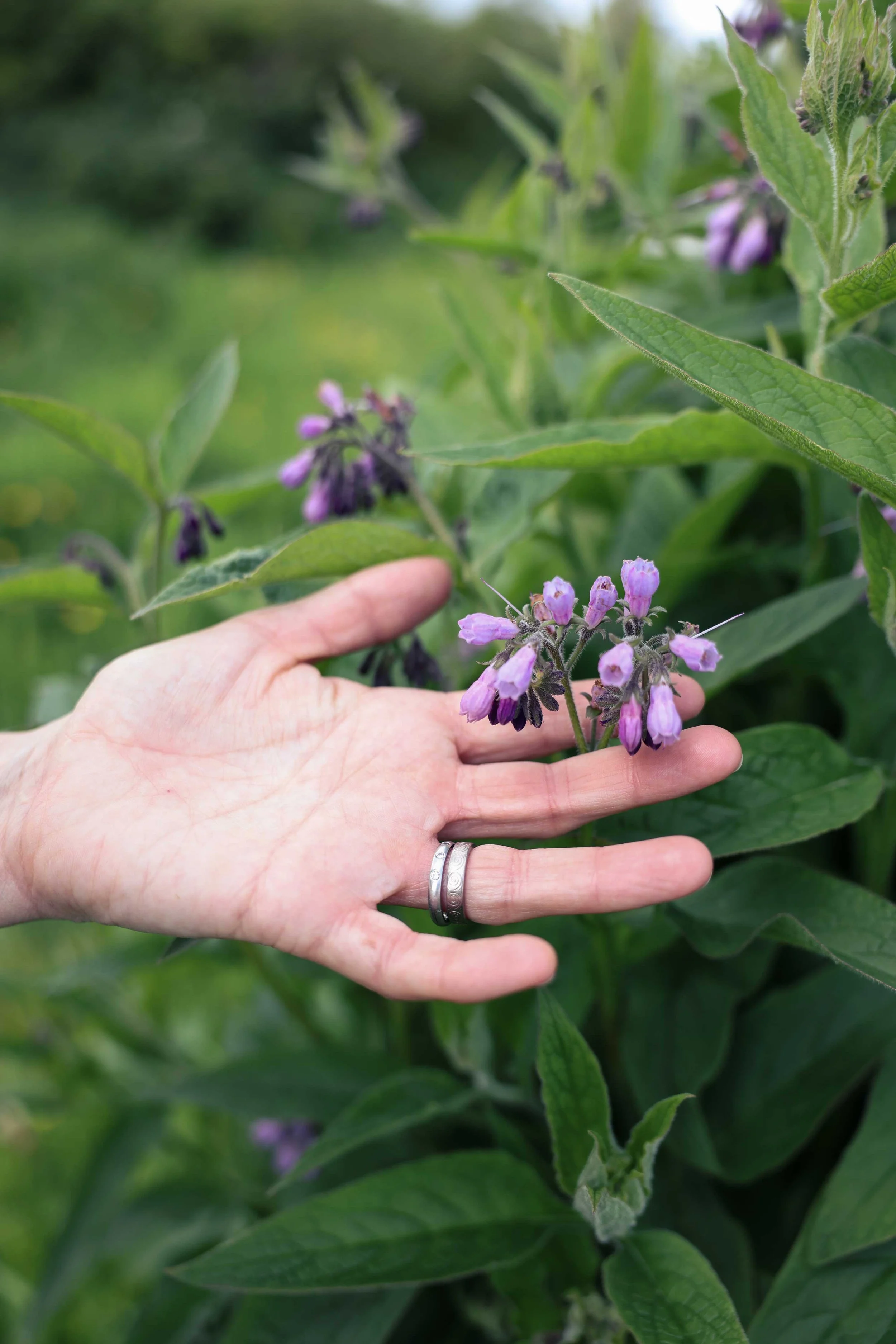
It is a great pollinator, meaning it has a long flowering period with nectar-rich flowers. Bees love it. It can have cream-coloured flowers but more common are beautiful purple flowers that are very attractive.
Planting / Foraging
Comfrey is very easy to grow; it is a hardy perennial. It is a tall, architectural plant that adds height and structure above the ground with a deep root system (the tap roots can go down 2m), which adds structure to the soil. It also spreads quite vigorously, so watch out if space is an issue. The best way to keep it in its desired spot is to strim down the clump size (the area at the bottom of the plant) at the end of the growing season.
Uses
Swellings, sprains, bumps and bruises are what comfrey is best known for. Until recently, it was used by families in the Aran Islands, Kerry, Limerick and other parts of the country as a poultice for healing broken bones. In rural areas, the leaves were used for fattening pigs and as a fodder for cattle. The blue-flowered comfrey was said to prevent and cure foot and mouth disease.
Comfrey makes a great natural nitrogen-rich fertiliser to use on the garden. The deep tap roots unlock and bring up a range of beneficial micro and macro nutrients and lock them, along with a healthy store of nitrogen, in the leaves. The fertiliser is very easy to make: pick off the leaves, soak them in a bucket, barrel or bin in water for a few weeks, then dilute at a ratio of 10:1 water to comfrey tea and use a watering can to fertilise the garden.