
Cleavers
Galium aparine | Garbhlus
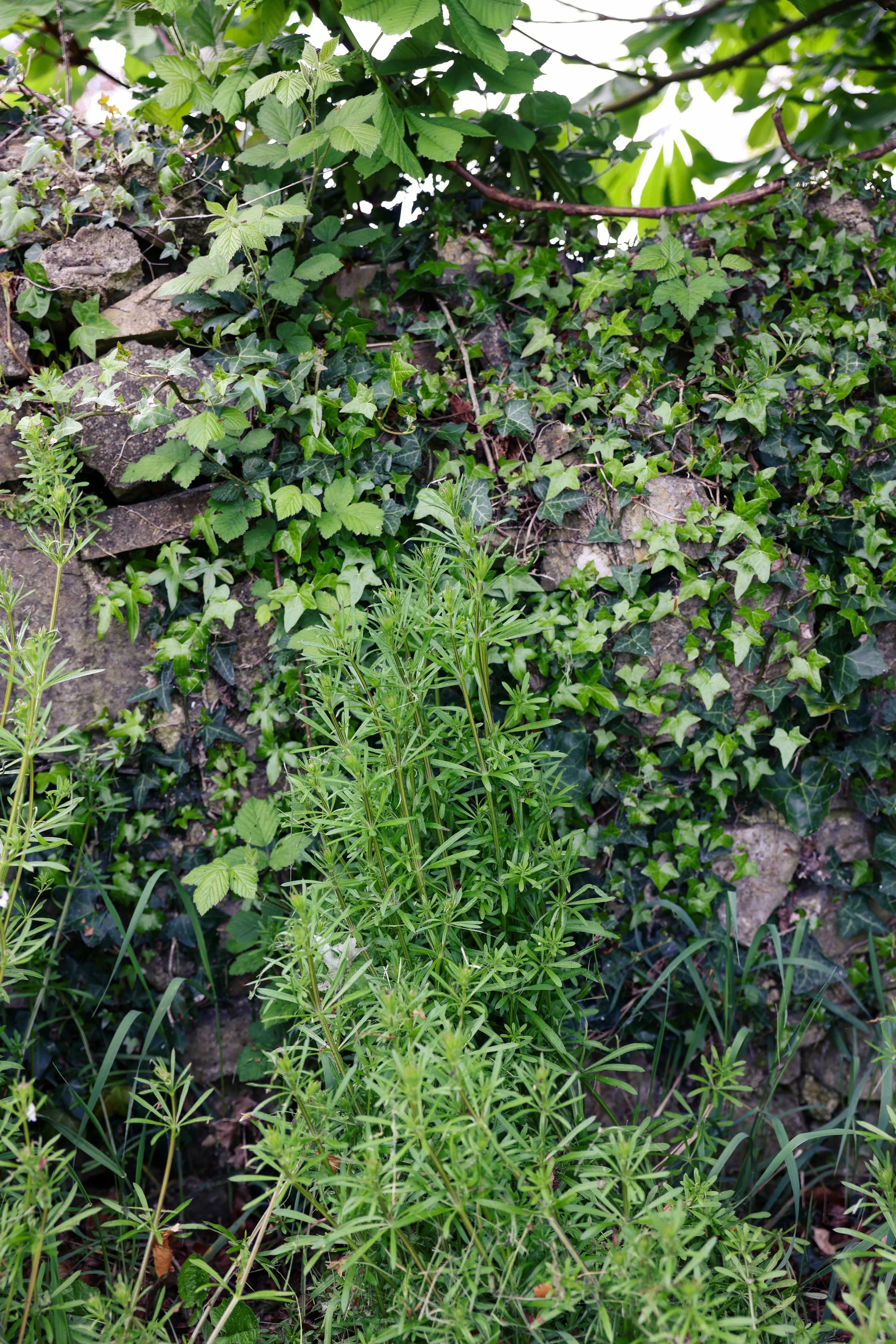
Cleavers name in Irish is garbhlus, which translates directly to rough herb or rough weed, is very apt, as the hooks all along the entire plant make it feel like a gentle, clingy version of very fine sandpaper. It was once commonly known as goosegrass, as it was given to goslings to eat.
Planting / Foraging
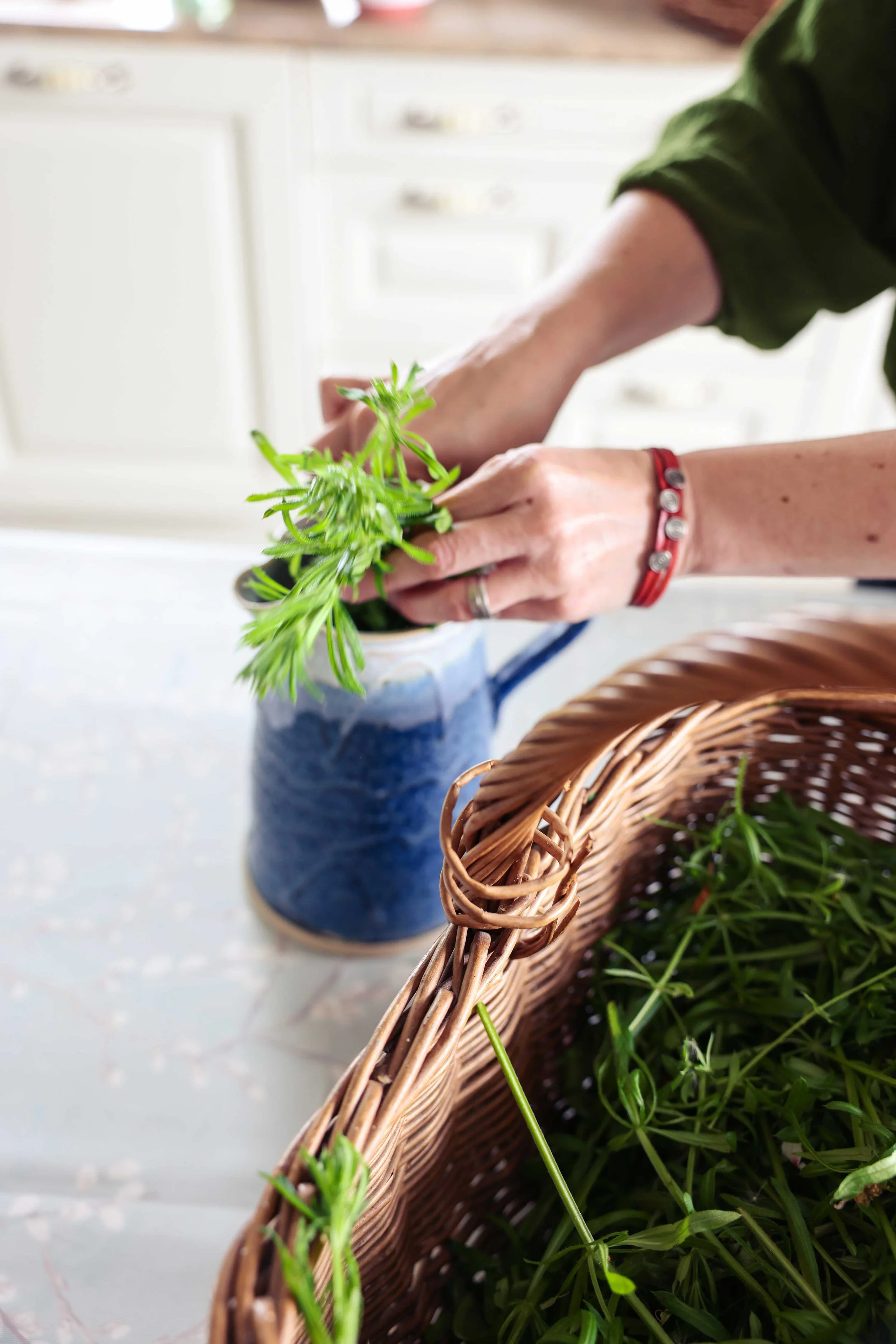
Cleavers is abundant in Ireland and very easily foraged; a short walk along almost any hedgerow in Ireland should bear some fruit. It likes to climb, both upwards and outwards, and loves old stone walls in particular, as well as hitching a ride on most plants in the garden. It’s one of the earliest herbs to emerge after the winter and is good to harvest from March to September. I have not come across any commercially grown cleavers to date.
Uses
A distant relation of coffee, in the eighteenth century the seeds were roasted and made into a coffee-like drink. In folk medicine in Ireland, cleavers was used as a spring tonic for the lymphatic system and the liver, both in need of a cleanse after the heaviness of the winter diet. This was its most recorded use. However, there are also references to a variety of other uses, such as to cure burns in Counties Westmeath and Wicklow and stomach-ache in Limerick. There are also references to its beneficial effects for weight loss: in the National Folklore Collection there is reference to how it ‘will make fat people thin if it is chopped fine and boiled in water or put into broth’.
Cleavers enjoys an elevated position in modern herbalism; it is considered a very valuable plant, recognised as being good for helping to lower blood pressure (a lot of us need that), helping to improve digestion and stimulate the flow of bile from the liver.
As a tonic it falls into the ‘prevention is better than cure’ category. It is a really good support to the lymphatic system in particular. In modern herbalism, these types of plants are known as alteratives, but cleavers, like most medicinal herbs, is cross- functional and is also used for diuretic and anti-inflammatory actions. Energetically, the herb is cooling and moistening.
As a lymphatic tonic with alterative and diuretic actions, it may be used safely for a wide range of problems involving the lymphatic system. These include swollen glands (lymphadenitis) anywhere in the body, especially tonsillitis and adenoid trouble. It is also helpful for the urinary system, immunity and external skin disorders, like cuts and scrapes. Overall, it is a really good, very underused all-rounder.