
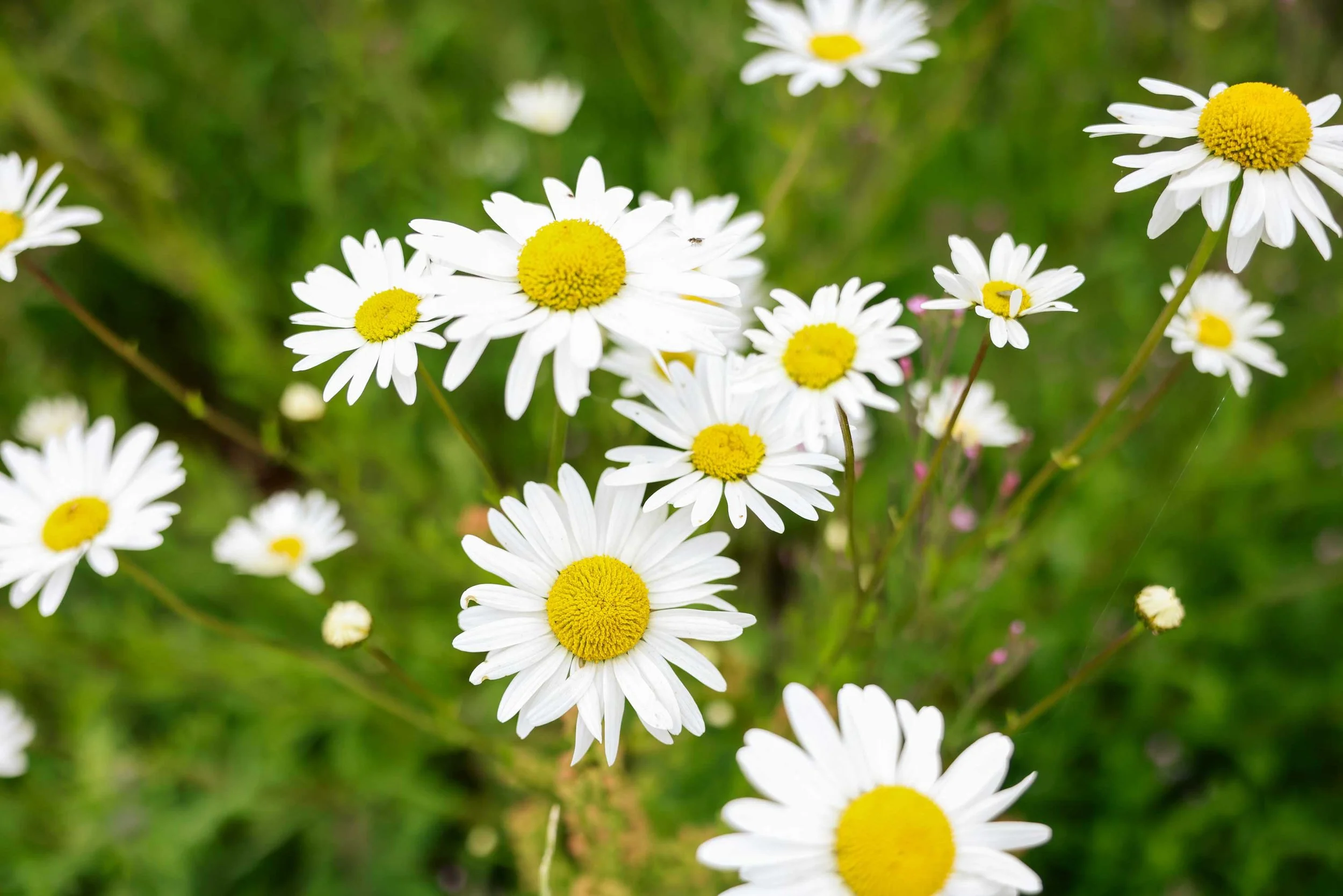
Chamomile
Chamaemelum nobile | Camán meall
It is a great anxiety reliever. It is often used as a mild sedative because of its soporific effect, and has been used as a calming sleep aid for a long time.
There are two types of chamomile – Roman and German. It is the Roman chamomile, Chamaemelum nobile, which is considered a native wildflower. It’s a creeping, aromatic perennial plant of roadsides, lakeshores, grasslands and heaths. Chamomile is frequently found in the southwest of Ireland, but it is a bit harder to find elsewhere.
The botanical name Chamaemelum, as well as the common name chamomile, are derived from Greek, meaning ‘earth apple’ or ‘ground apple’. To see why, simply crush a fresh flower between your finger and thumb and soak in the aroma. Pliny, the most revered Roman naturalist, confirms that chamomile was so named because its scent was reminiscent of apples.
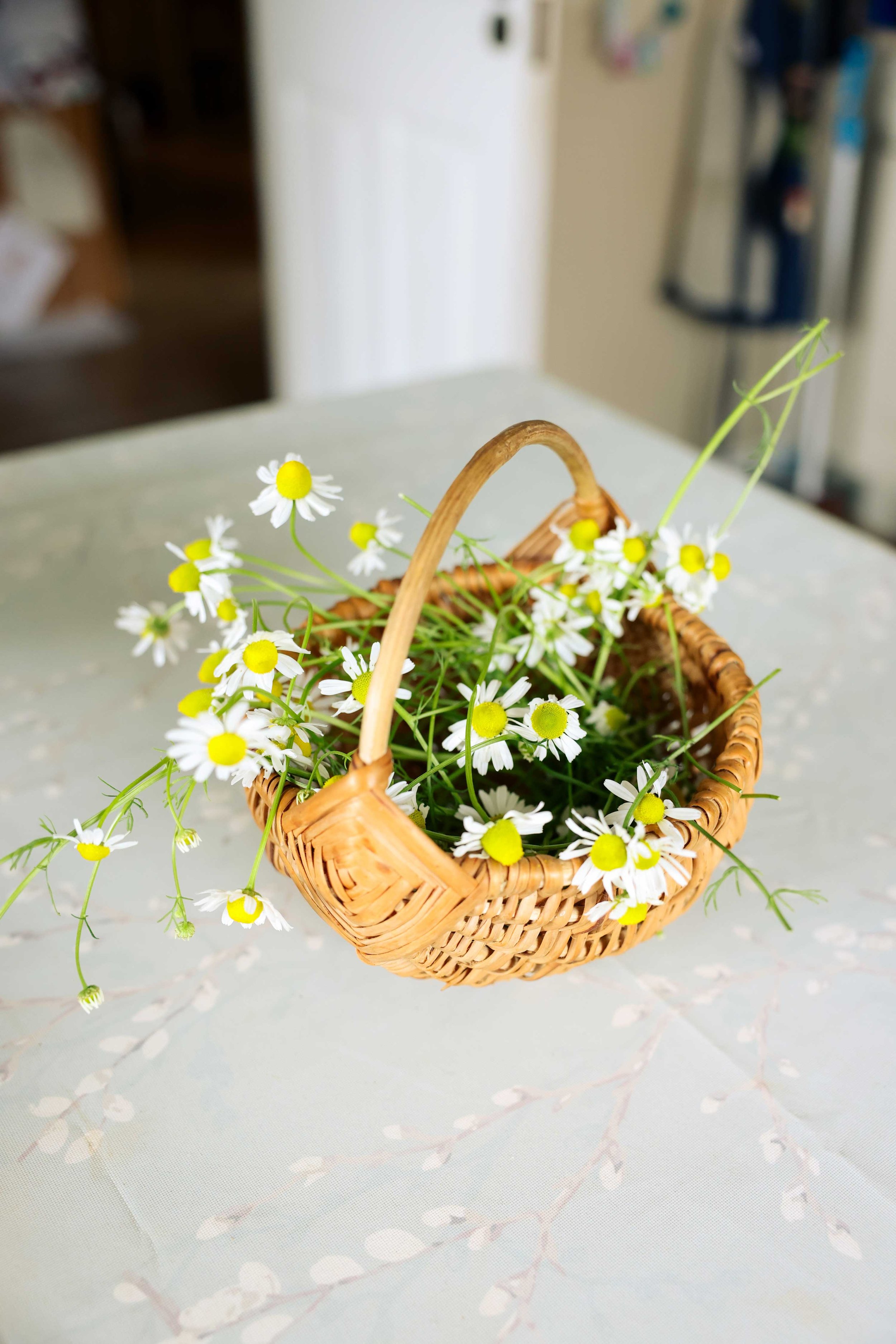
Planting / Foraging
It is very easy to grow from seed. Roman chamomile is a perennial whereas German chamomile is an annual. Although German chamomile is an annual, if it is let go (this is where the plant is allowed to seed and left so the seeds fall and self-germinate), it will self-seed and spread.
In Ireland, chamomile lawns were popular in Elizabethan times as they gave off a delicious fragrance when walked on. They are easy to establish and maintain. We have just started a chamomile lawn ourselves. Using Roman chamomile, this can be created in a small or large space by planting small plants 30cm (1ft apart). Plant in early spring, try not to walk on it too much in the first year, and the chamomile will ‘creep’ and fill up the empty spaces over the next two to three years.
Many gardeners think of chamomile as a ‘plant doctor’ herb because it has a remedial and healthy effect on neighbouring plants – especially plants which appear weak or sick.
Uses
In a field study conducted in the west Kerry Gaeltacht around Dingle over twenty years ago, chamomile was recognised as an important medicinal plant. It was used for good rest, for sleep, for calming, chicken pox, skin irritations and calming while pregnant. Chamomile is also referenced in the National Folklore Collection as being used for curing the whooping cough. The herb was boiled and the juice was drunk. Alongside this, there are many references to its use as both a relaxant and its benefits for irritated skin.
In modern herbalism, chamomile is still used in the same ways – as a digestive aid, for relaxation, to help with sleep and for irritated skin, including acne and eczema.