
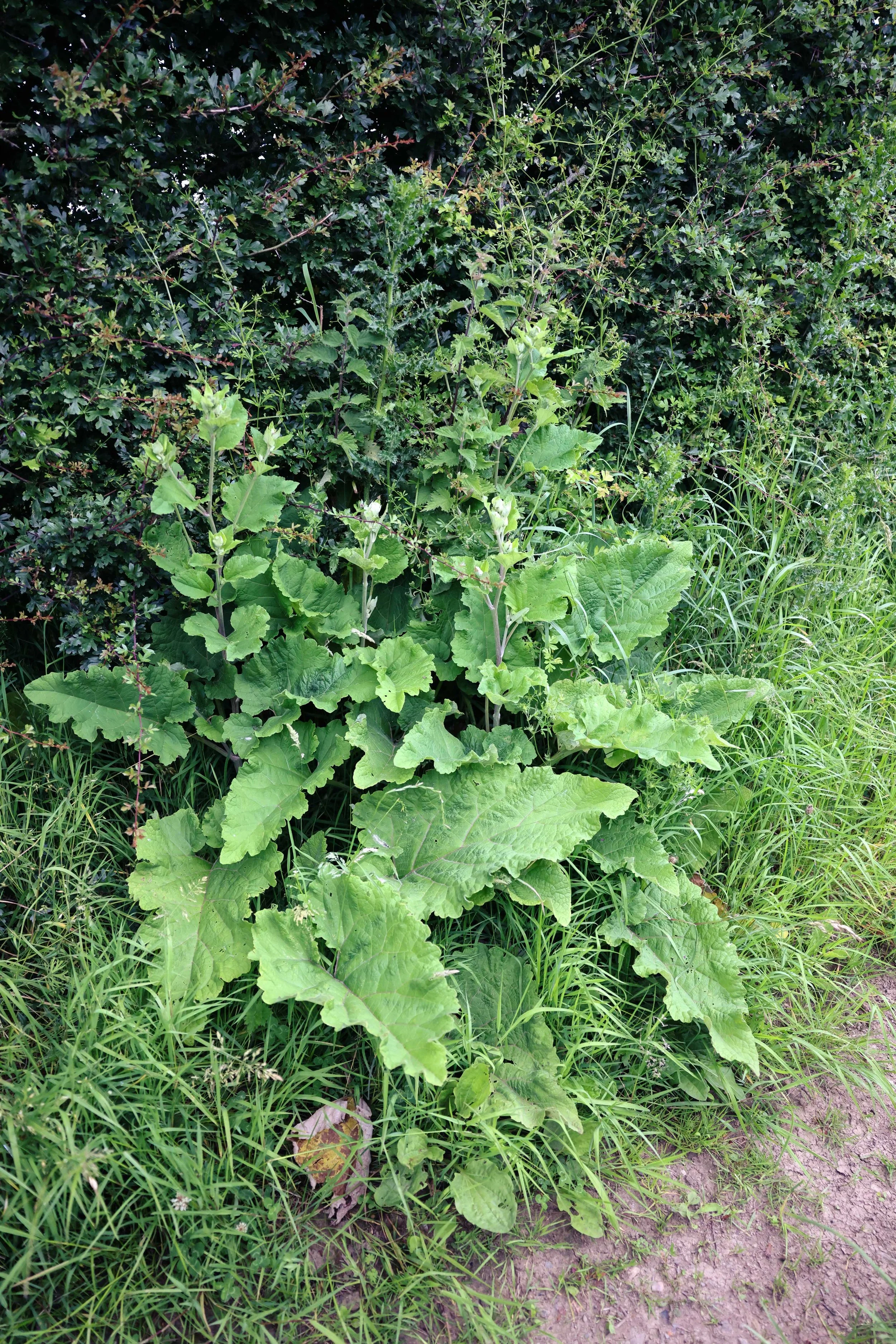
Burdock
Arctium lappa | Cnádán
Burdock is the unsung workhorse of the Irish medicinal plant world. It doesn’t have as big a personality as nettle, nor is it as obvious and noticeable as dandelion, but its effect does become stronger when used as an ingredient in a recipe. It reacts well when combined with other ingredients.
Burdock is not as heavily documented in folklore as some other medicinal plants, but it is widely used in modern herbalism.
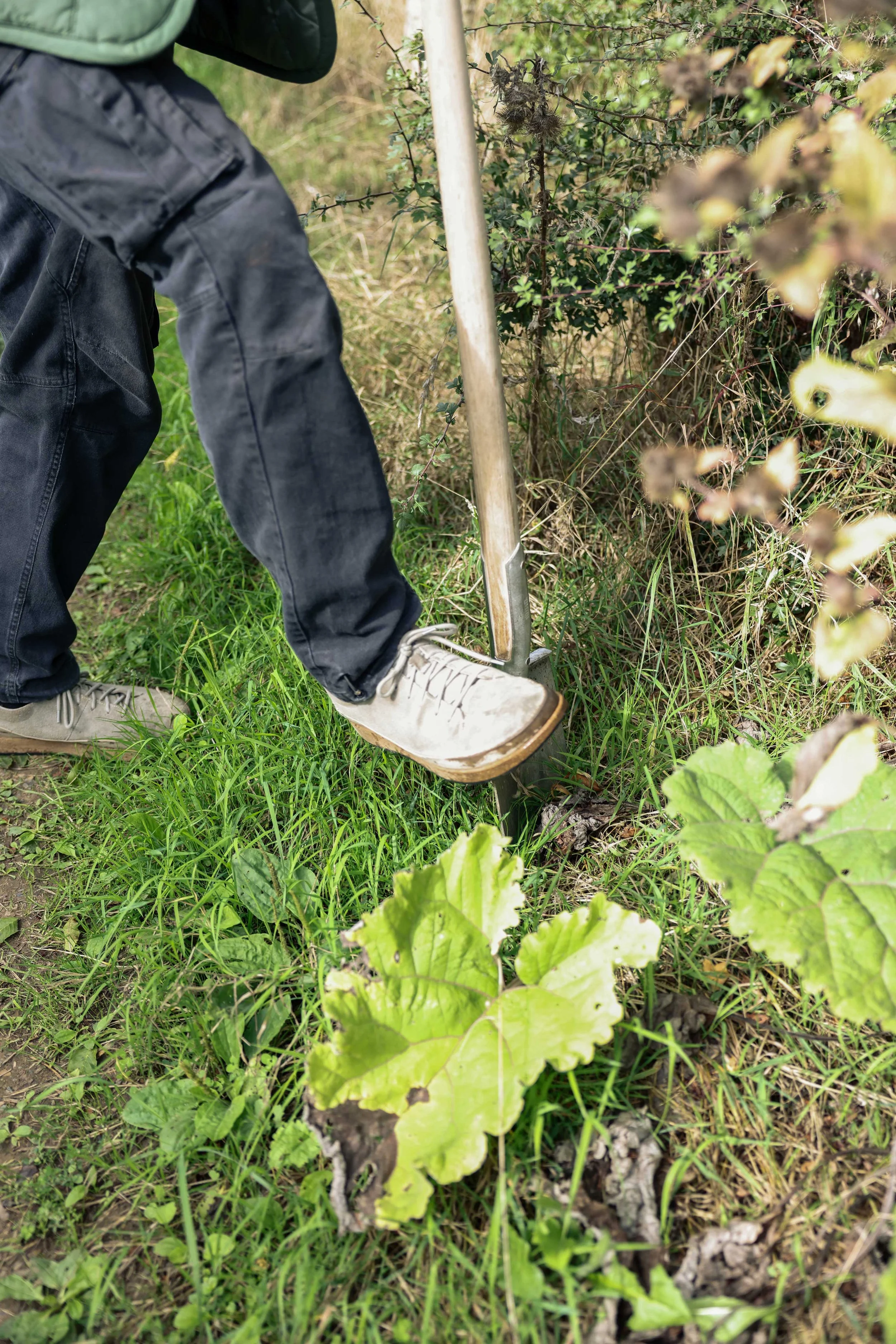
Planting / Foraging
It is easy to recognise when it is in seed, as the pods or the burrs (which give this plant its name burr-dock) are covered in tiny hooks that stick strongly to your clothes. There are two species, Arctium lappa and Arctium minus, the main difference being their size. In Ireland, we have both, and in mid to late summer it grows wild around the country and can be found in most ditches. I’ve spent many minutes picking the burrs off jumpers, trousers and socks.
The burrs are different to cleavers (stickybacks) and are usually bigger, browner and drier than cleavers, which are normally smaller, rounder, greener and less spiky.
Uses
Burdock has a large taproot that tastes like something between a parsnip and sweet chestnut, which we used to eat as a food here. It is still widely consumed in Asia. In the past, the roots were used to cure boils and other skin complaints. It was also used to cleanse the system.