
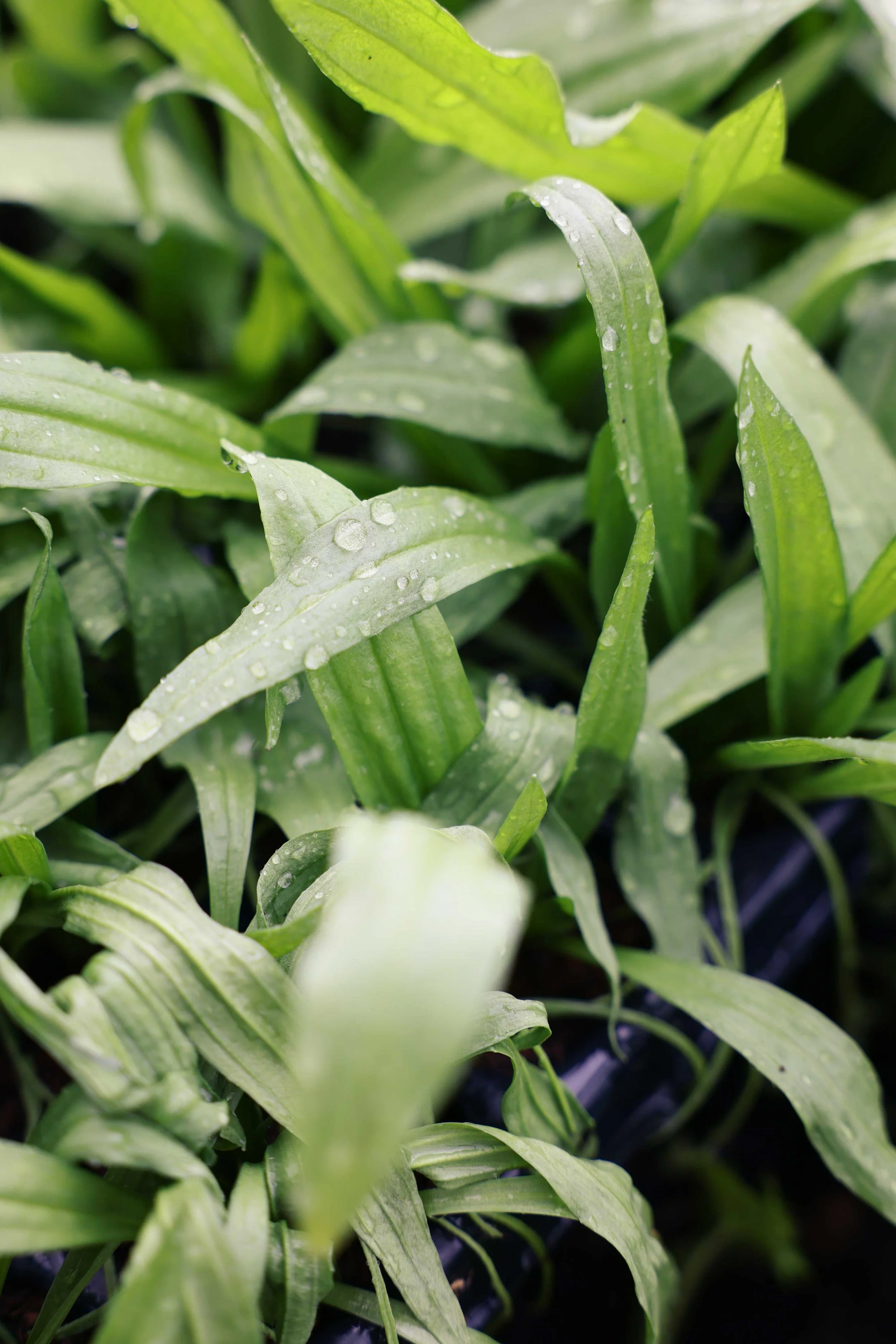
Plantain was an important medicinal herb in the history of Irish folk medicine. Traditionally, it was used for healing wounds or burns, and for stopping bleeding when applied externally, mostly by applying and strapping the leaves or as a poultice made from chopped-up leaves.
Plantain is common throughout the island and there are a number of varieties. Buck- horn plantain is vigorous around coastlines in a variety of habitats such as salt marshes, cliffs, dunes and wild land. Sea plantain is also very easy to find. Ribwort plantain is extremely common, and plantain major is equally prolific. Plantain leaves of all varieties are rich in tannins, which are astringent and really help to heal wounds. The leaves of all the native plantains are edible and make a nice addition to a salad.
Interestingly, plantain travels with the arrival of agriculture and there are pollen samples of ribwort plantain in Ireland dating to 4000–3000 bce, which suggests that agriculture had arrived in Ireland by that stage.
Plantain
Plantago | Slánlus
Planting / Foraging
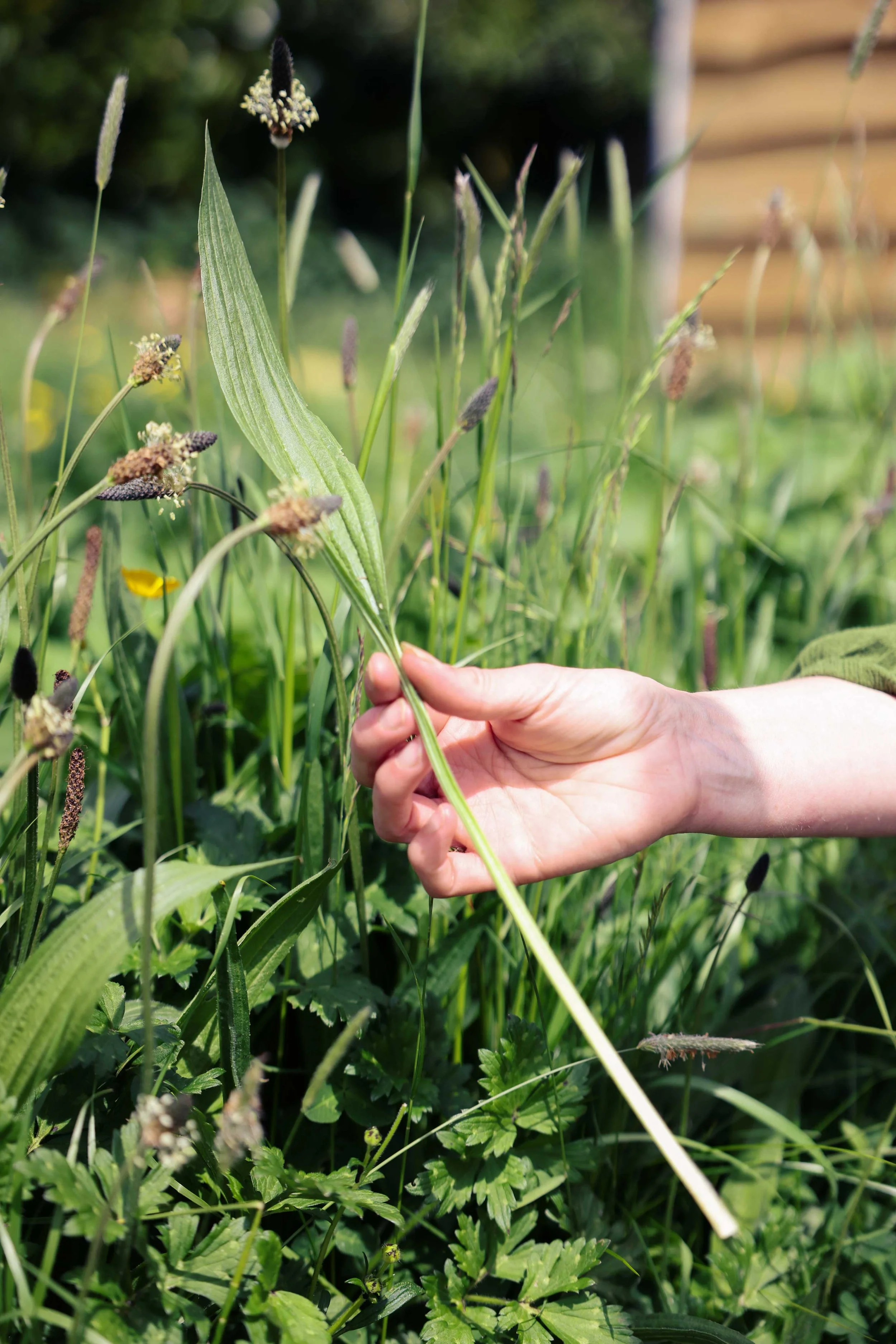
Plantain is very easy to forage; most grass areas that haven’t been cut in a few weeks will have some plantain growing there. It is also very easy to grow from seed. Plantain loves Ireland.
Uses
Plantain is known for its ability to stop bleeding from an external injury in a matter of minutes. It can be applied directly or chewed and ingested.
It is not so well known, but is equally effective, for respiratory infections. It really helps to draw out foreign bodies and associated mucus from the lungs and is known to be very helpful for people who are giving up smoking. It is also good for the treatment of coughs and mild bronchitis, either as a tincture or a tea, so it is always handy to have a plantain tincture in the house and some dried for a tea blend.