
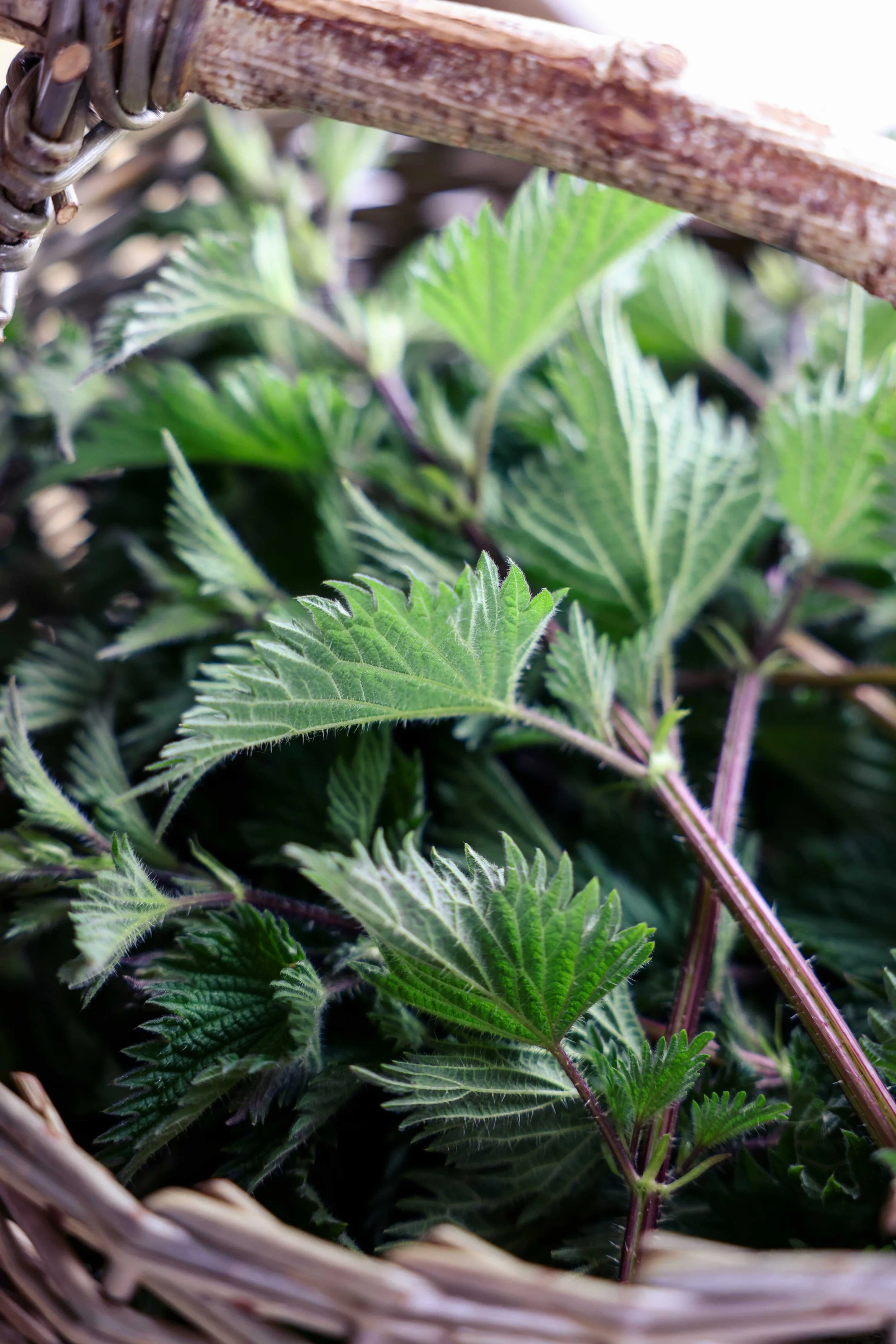
Nettle is the superfood of the Irish herbal world. It is a food that has long been associated with the Irish people. Nettle’s antioxidant levels and vitamin C are off the Richter scale. Their leaves are more iron-rich than spinach. Nettle is a great all-rounder, a bit of a wonder food, with a wide range of medicinal benefits. It can be used as a tea, as a tincture, as a poultice. It is widely recognised as a tonic and a body cleanser, as well as being used for rheumatism and arthritis. It is also an anti-histamine and good for high blood pressure. It is one of the hardest-working Irish medicinal herbs.
During the Great Hunger of 1845–1851, nettles were one of the three main plants, along with charlock and carrageen (a red seaweed), that kept a large amount of the population from starving. This is reflected in the Ulster-Irish name for nettle, cúl faiche, which means field cabbage.
I wonder if that has influenced the way a lot of people feel about the nettle. Quite a number of people, particularly herb growers I know, feel a real affinity for the nettle. It really seems to be of the land, a truly native plant. Traditionally, it was recommended that you should have three meals of nettles in early May to fortify the body for the year ahead. From what we know today about its nutritional value, with its high levels of antioxidants, iron and vitamin C, it is probably good advice to have it three times at the start of every month.
It is a great indicator-plant for human activity or abodes and even an indicator of former human presence in certain areas. It grows in very nitrogen-rich patches; it is a very nitrogen-hungry plant. It loves the remains of disintegrated mud dwellings, outdoor bathrooms and old areas where all the kitchen waste was thrown out.
Nettle
Urtica dioica | Neantóg
Planting / Foraging
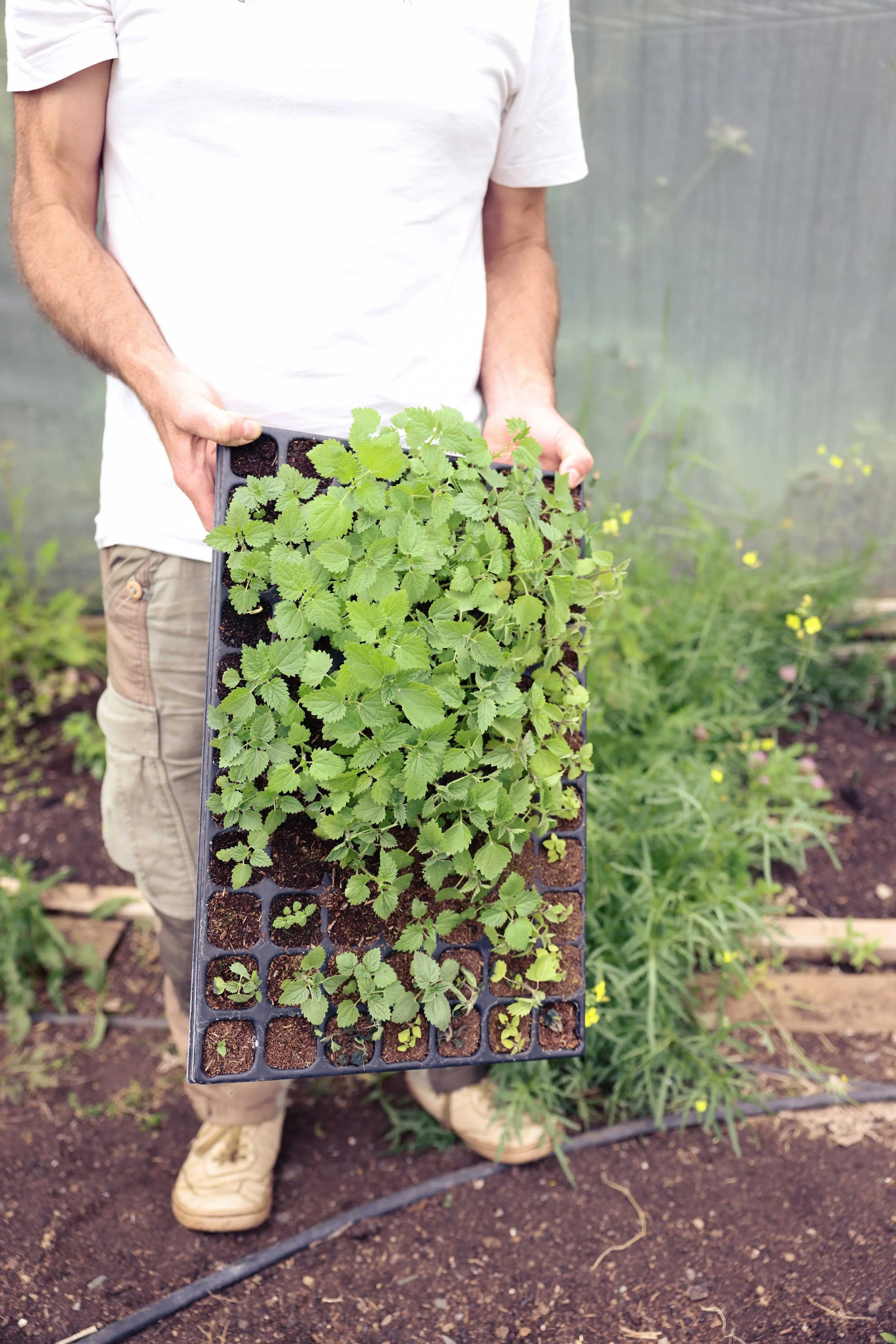
Interestingly enough, nettles are trickier to grow where you want them to grow than where you don’t want them to grow. We have propagated a couple of hundred plants from seed (pictures here) and have planted them out this year. Another way to propagate them is from the rhizomes. This is where you pull up the root system and cut out these little knobbly bits of the main roots and replant them.
Nettles are very, very, very easy to forage in Ireland. They say the most important crop in Ireland is grass. I think the most abundant medicinal herb is nettle.
Uses
From a medicinal point of view nettle is very good as a liver cleanser. As a blood cleanser, nettle seeds are the real superfood. Nettle seeds are so easy to harvest, dry and store, and are a great sprinkling for porridge, cereal or soup in winter.
In the National Folklore Collection, Mrs Sheehan, Kilcolman, Co. Limerick, told the collector that ‘nettles were used for nourishing the blood and for blood pressure in olden times’. In order to prepare nettles for nourishing the blood, a person would have to boil them in water for about half an hour. The nettles would then be strained and ‘eaten like cabbage’.
Numerous folk remedies are associated with the nettle. It is really good for rheumatism. There is a long-documented history of flagellation with stinging nettles to help with the pain of rheumatism. The practice probably goes back to that sympathetic magic folk belief – like deals with like.