
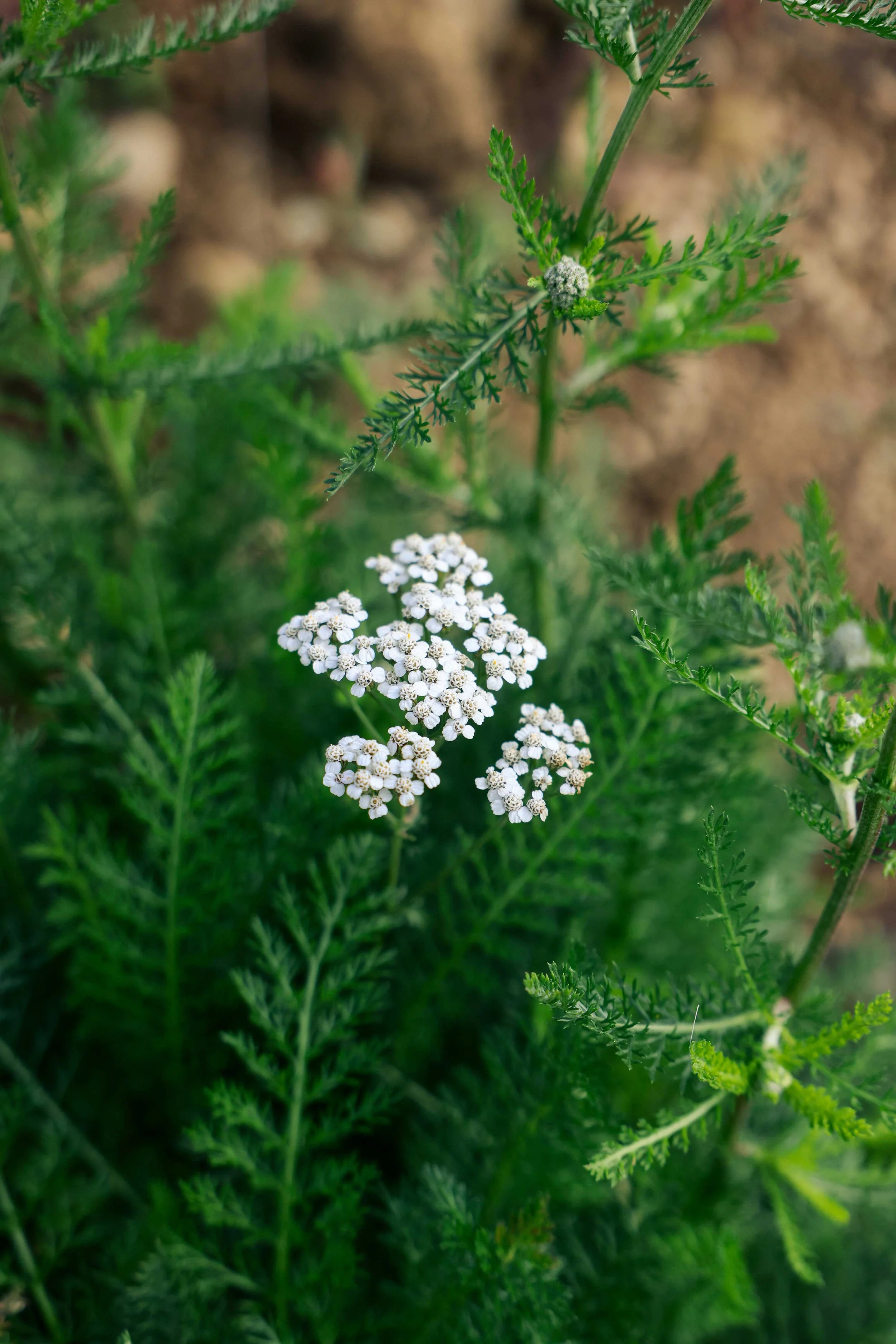
Yarrow
Achillea millefolium | Athair thalún
Yarrow is a common sight in Irish hedgerows during the summer. It was an important magical as well as medicinal herb. It is considered one of the seven magical herbs, along with vervain, St John’s wort, speedwell, eyebright, mallow and self heal.
Homer, in his epic poem The Iliad, describes how Achilles used yarrow to stem the bleeding of deep wounds during the Trojan war. Yarrow’s association with Achilles gives it its Latin binomial (a two-word biological species name): Achillea millefolium. The ‘Achillea’ refers to Achilles; ‘millefolium’ means ‘thousand-leaved’, a reference to its deeply incised feathery leaves.
Planting or Foraging
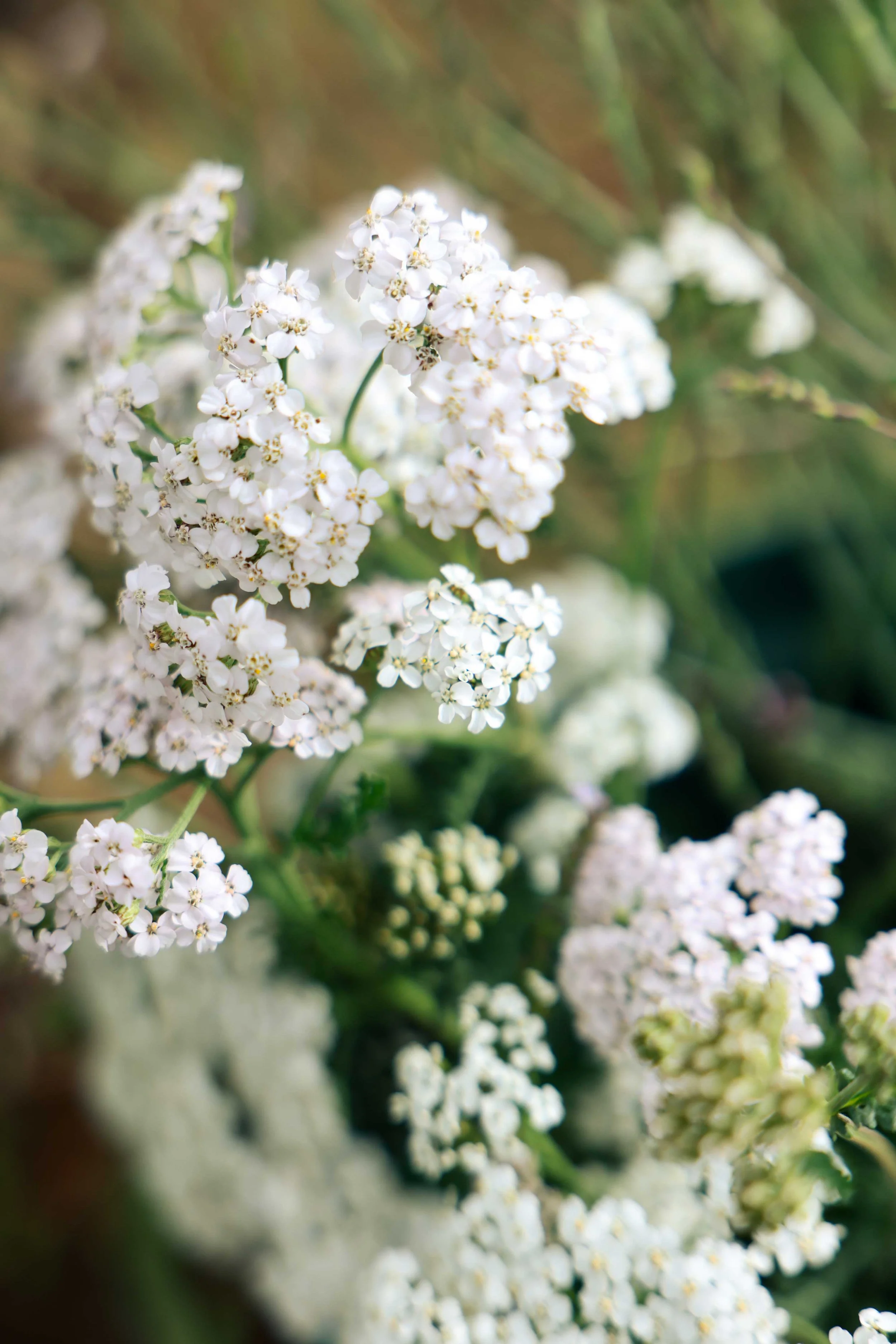
Yarrow is easy to grow and also easy to forage in the wild. It has a widespread roadside (hedge/ditch) presence across much of the country and can be found in most grassland that hasn’t been mown back. Because it’s so easy to grow, it’s always a good plant to have in the garden, especially when there are children in the house.
Uses
It’s great for stopping bleeding in case of any cuts. There are a few ways you can use it. A ‘spit poultice’ was probably the most common way to use yarrow for bleeding. Simply chew the leaves and then apply to the cut.
It is also a peripheral circulatory herb, and the best way to gain benefit from it is by drinking the dried flowers as a tea. The effects are almost immediate; it helps to dilate peripheral blood vessels, without the heating properties of ginger and chilli, and yet it also works as a styptic – something that helps a wound to stop bleeding. Yarrow is one of those many herbal paradoxes that help perform two opposite actions in slightly different situations.
Yarrow can also help with menstrual cycles, reducing heavy bleeding, helping with cramping and also supporting regular periods and easing general stomach cramps.