
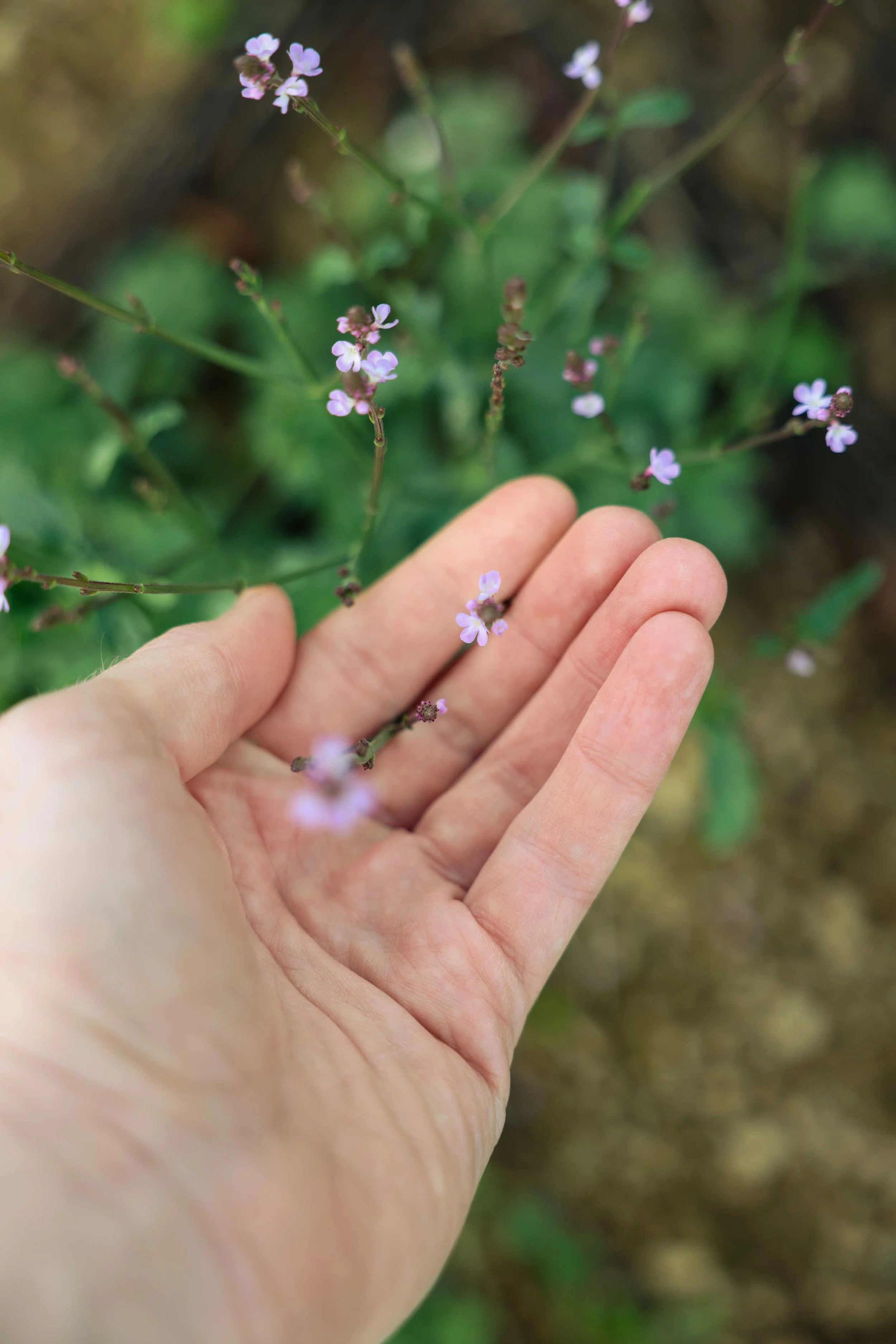
Vervain
Verbena officinalis | Beirbhéine
Vervain is considered a great protector against evil spirits or negative energies in all of the Celtic countries, including Scotland and the Isle of Man. In all these countries, it is known for its magical protective powers and has a long-standing tradition of being used in ritual and magic.
One of the sacred herbs of the druids, its use has been recorded throughout much of Ireland, though more rarely in recent times. It occurs on roadsides, in rough grassland and waste places and on calcareous (chalky) soils.
In folklore and the Irish language, certain wise women in old Ireland were known as bean feasa and were highly respected figures in Irish society. They served as community healers, seers, herbalists and counsellors, acting as mediators between the natural world and the spirit world. To me, they were on a par with the shamans of indigenous cultures.
According to the old herb doctors and the bean feasa, vervain was one of the seven herbs of great power; along with these, ground ivy, foxglove, groundsel, hazel, the bark of the elder and shoots of a young hawthorn were also thought to be very powerful. But in order to be endowed with their powers, it was necessary to gather them on a sunny day at noon when the moon was full; they then needed to be placed to ‘rest’ for a while in the hand of a dead man.
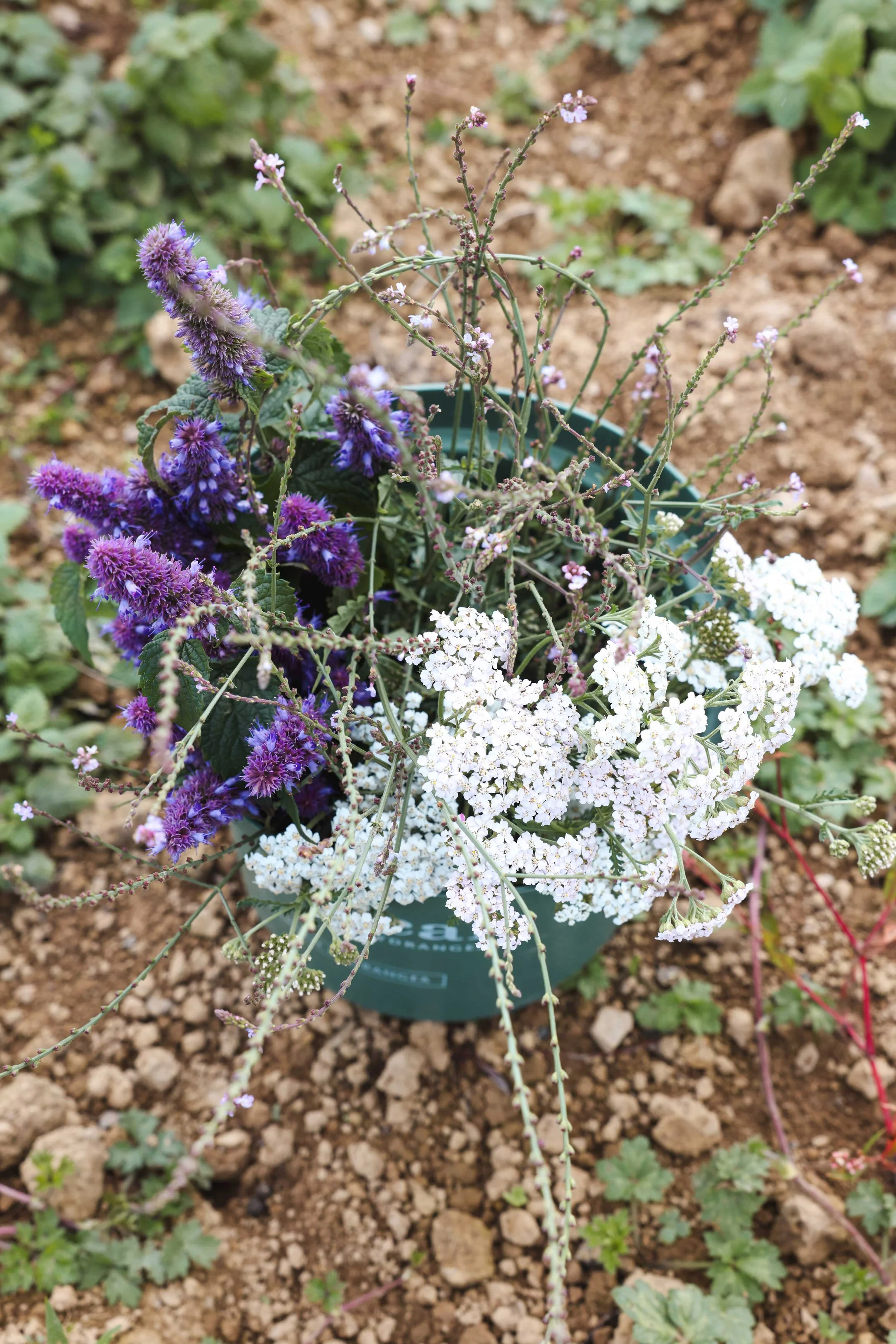
Planting or Foraging
Vervain is a tall plant with thin branching stems. It looks quite spindly, and in the late summer months, it has clusters of tiny purple flowers. It can be found quite easily on roadsides across Ireland and it also likes rough grassland.
Vervain is traditionally gathered at midsummer or at the rising of the Dog Star, when neither the sun nor the moon is out. This is when the constellation Sirius rises around 19 July, then the ‘dog days’ of summer begin, lasting from anywhere between thirty and sixty days.
Uses
In the National Folklore Collection there is reference to the liquid in the stalk (sap) being very healing for cuts and sores. Vervain was regarded as a holy herb and was used to cure scrofula and the bite of animals, to restore friendship and as a pledge of good faith. It is reputed to have been used as a sign of peace by Roman negotiators who carried sprigs of vervain to signify their intentions in negotiations.
In modern herbalism, it is classified as being mostly a nervine. It is very relaxing and is considered very helpful for long-standing nervous tension or long-term chronic stress. As well as relieving tension, it is also a tonic to the nervous system. In short, vervain may be safely used for any situation in which tension and anxiety cause problems, whether they be physical or psychological.
It is also a strong bitter herb and so provides good digestive support. It works best in a tincture (with a ratio of 1:5 dried herb to alcohol at 60 per cent, or 1:1 if using the fresh herb) and up to 10ml can be taken at a time.