
Mugwort
Artemisia vulgaris | Liathlus mór
Mugwort is known in Irish as liathlus mór (the big grey plant) or lus an tSeanduine (the old man’s herb). It has a dual history in Ireland as both a magical protective ward and a staple of traditional women’s medicine.
The name mugwort is thought to have come from its use as a method of giving flavour to beer. Before hops were used in beer making, mugwort was widely used as the flavouring agent. The dried flowers were used for this purpose.
It was considered one of the most important herbs in medieval medicine and has a reputation for being a powerful, magical herb.
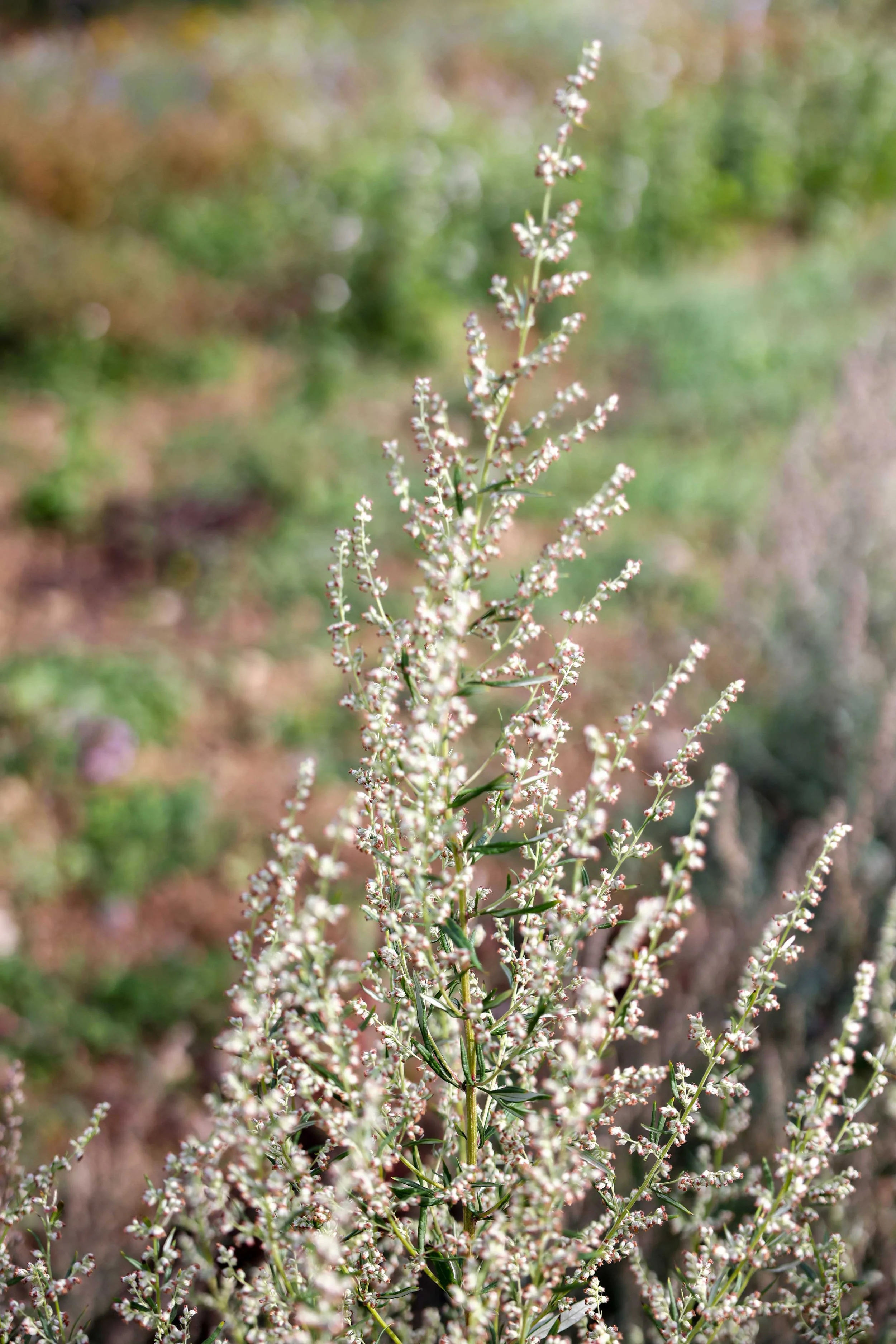
It is a tall perennial, reaching over 150cm, but dies back in winter, and in the wild it grows on waste places, embankments and dry banks. Mugwort is a tall, elegant plant, slim and not bushy, with dark green leaves that look jagged. The underside of the leaves is a furry silver that almost glimmers. The flowers, which develop in late summer, are red, small and tubular.
Planting / Foraging
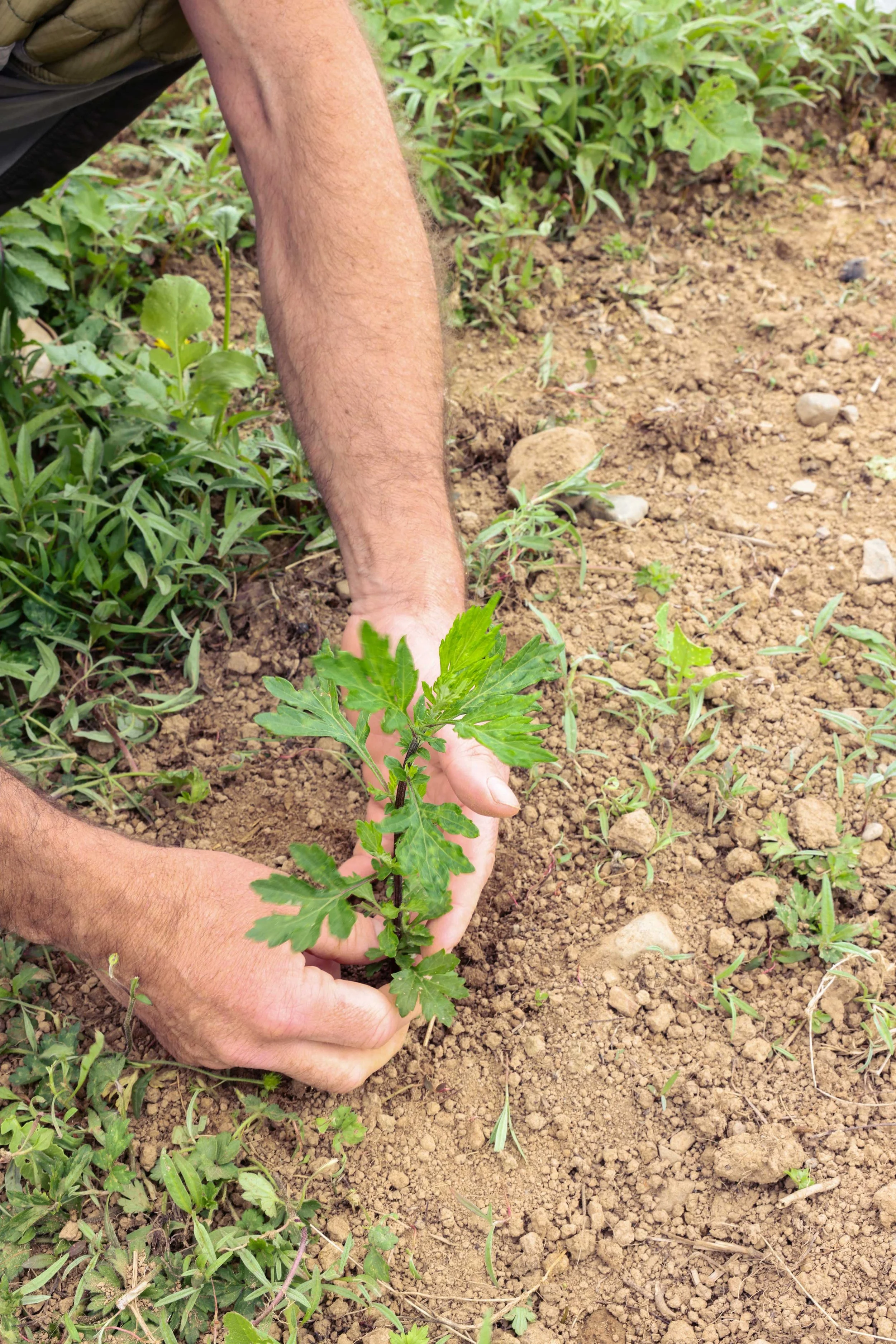
Mugwort can be found easily in the wild; it is very widespread. It is also very easy to grow, especially from seed. When growing it at home, treat it like mint – if not in a pot it sends out creepers and takes over beds, so if space is an issue, put it in a pot.
In a bed of ours that was started from seed, the mugwort had taken over after only one year.
Uses
It has a reputation for bringing on lucid dreams when ingested ... a tea made from dried mugwort should do the job (but fresh is better). It doesn’t work on everyone, but it is well worth a try.
Mugwort also has a history of being used as a smudge stick: basically the leaves are wrapped, tied and dried, and then the stick can be burned (very briefly). The fragrant smoke is believed to protect (to ward off evil spirits) and to cleanse a space (if there has been illness in the house). Niall Mac Coitir writes, in his beautiful book Ireland’s Wild Plants (2015), ‘In Ireland mugwort was also singed and inhaled by patients as a remedy, and it was used to fumigate the sickroom.’
It has also been traditionally associated with St John’s Eve (23 June). This festival is the Christianised traditional mid-summer celebration day. It was picked on the morning of that day. Its powers were then purified and strengthened by smoking it over the bonfires that were lit to mark the festival. Maybe this concept is where the use of smudge sticks came from, as, once it was smoked over the bonfires, sprigs were then tied up and hung in houses and byres (cowsheds) to protect against evil spirits and disease. It was also believed to protect travellers from fatigue, sunstroke and wild animals. Lore suggested it was a good idea to place the plant in one’s shoes to remain refreshed on long journeys.
Historically, it was sometimes called the ‘witch’s herb’ and was placed by the doors of local healers and midwives as a sign of their practice. Mugwort was central to Irish herbalism for centuries. Its primary historical use was for ‘provoking the menses’ (restoring menstrual flow) and easing childbirth. It can be used for a number of ailments including the treatment of irregular cycles, premenstrual tension, depression, anxiety, poor digestion and lack of appetite.
The Vikings continued to use mugwort as an essential ingredient in brewing, taking the herb’s effects to another level. They drank mugwort-laced ale to induce visions. In later centuries, mugwort was sometimes called ‘sailor’s tobacco’ – if the leaves were dried correctly, they could be smoked like a cheap tobacco substitute.